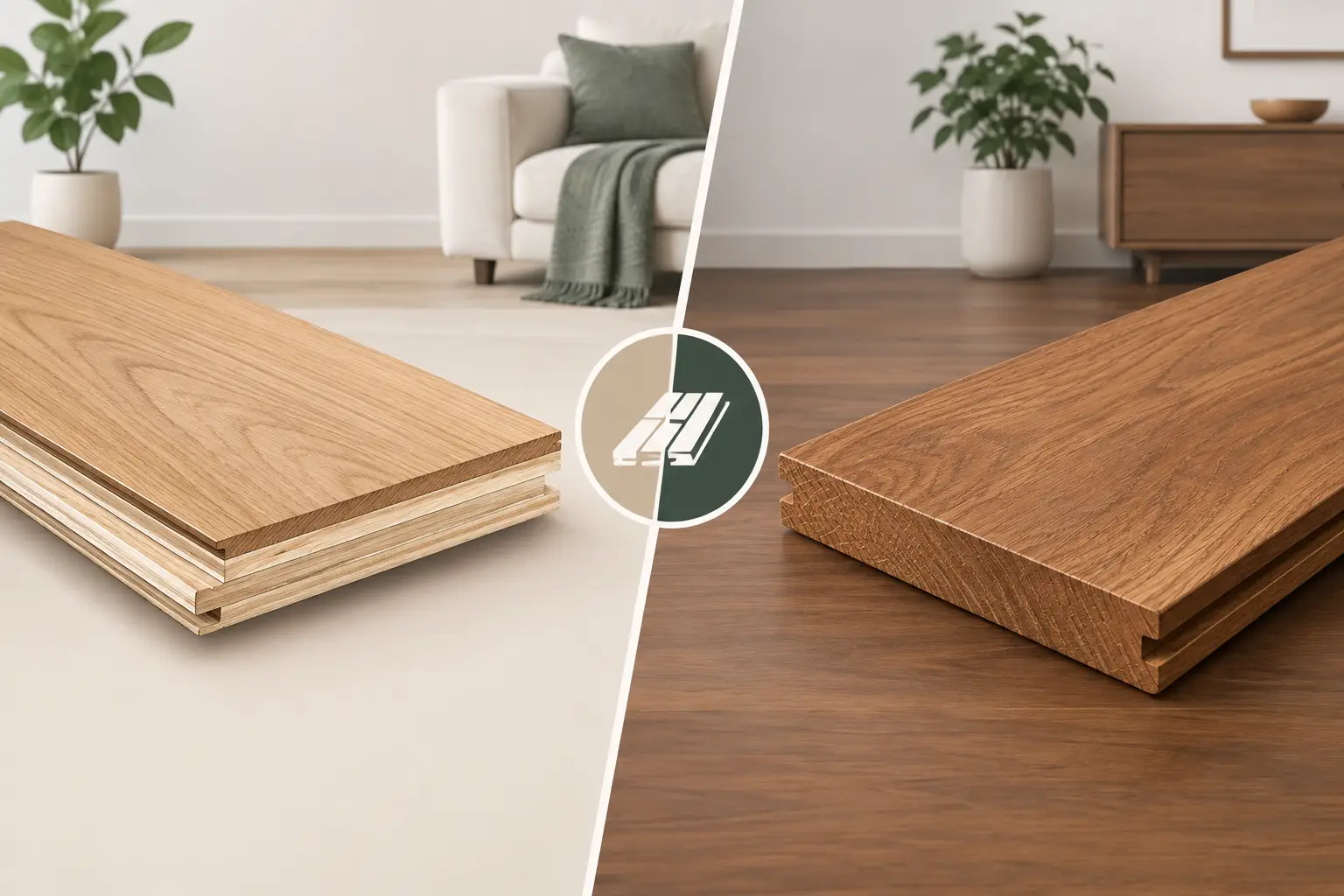
A new timber floor can change the feel of a room before a single piece of furniture goes back in. Yet the choice between engineered wood flooring vs solid wood is not simply about appearance. Both offer real timber, natural grain and lasting character, but they behave differently once they are installed in a busy Buckinghamshire home.
For a calm upstairs bedroom, a period-property renovation or an open-plan kitchen-diner, the best option depends on the room, the subfloor, how the space is used and how much flexibility you need from the installation. The good news is that neither choice is a compromise when it is selected for the right reasons.
Engineered wood flooring vs solid wood: the key difference
Solid wood flooring is made from one piece of timber throughout. A solid oak board, for example, is oak from its top surface to its underside. It is a traditional choice with genuine depth, and it can usually be sanded and refinished several times over its long life.
Engineered wood flooring has a top layer of real hardwood, known as the wear layer, bonded to a stable multi-layer plywood base. It is not laminate, printed wood effect or a lesser imitation. The surface you see and touch is real oak, walnut or another chosen species, with the same natural variation in colour and grain that makes timber flooring so appealing.
The construction is where the practical difference lies. Timber naturally expands and contracts as temperature and humidity change. The cross-layered core of engineered boards helps reduce that movement, which makes them a particularly versatile choice for modern homes.
Why engineered wood suits so many homes
Engineered wood has become the preferred timber floor for many renovations because it brings the look of a wide, characterful hardwood board with fewer installation restrictions. It works well in lounges, hallways, bedrooms and open-plan living areas, and is commonly chosen for kitchens where conditions are more changeable than in a quiet bedroom.
Its greater stability also makes it suitable for use with most underfloor heating systems, provided the flooring and heating system are specified correctly and installed in line with the manufacturer’s guidance. This is a major consideration for extensions, self-builds and refurbishments where underfloor heating is part of the plan. Solid wood is generally not recommended over underfloor heating because repeated temperature changes can cause excessive movement.
Engineered boards are available in a huge selection of widths, lengths, grades and finishes. A brushed and oiled oak can bring texture and warmth to a family home, while a clean select-grade board gives a more contemporary look. Wide plank formats are especially popular in larger rooms, where they show off the timber’s grain and create a less busy finish.
There is also flexibility in fitting. Depending on the product and subfloor, engineered flooring may be glued down, floated or fitted over an appropriate acoustic underlay. A professional installer can advise on the most secure method for your room, but the board construction gives more options than traditional solid timber.
Do not confuse engineered wood with laminate
This is a common and understandable mistake. Laminate is a durable, affordable floor with a photographic decorative layer beneath a protective surface. Engineered wood has a genuine hardwood veneer on top. It can be lightly sanded in many cases, develops the character of natural timber over time and offers a depth of grain that manufactured designs cannot fully replicate.
For homeowners who want premium wood flooring at affordable prices, engineered boards often sit in a very useful middle ground: authentic timber appearance, practical performance and a broad choice of finishes.
When solid wood flooring is worth choosing
Solid wood has an appeal that is difficult to reproduce. Each board is substantial, traditional and made from a single material. In the right setting, it is a superb long-term investment, particularly in older homes where original features and natural materials are central to the character of the property.
A solid oak floor is an excellent option for stable, dry rooms such as bedrooms, lounges and studies. It can be refinished more extensively than an engineered board with a thinner wear layer, giving owners scope to refresh the floor after years of use. Scratches, dents and surface wear are part of timber’s life, but solid flooring offers more material to work with when restoration is needed.
It also has a certain visual authenticity in period homes. Traditional narrow boards, warm tones and a natural oiled finish can sit beautifully alongside fireplaces, timber doors and original joinery. If the home has a consistently controlled indoor environment and the subfloor is suitable, solid wood can provide decades of service.
That said, solid timber needs respect for its natural movement. It is not normally the right choice for bathrooms, and it requires extra care in kitchens, conservatories and areas with significant fluctuations in humidity. Spills should be wiped promptly on any timber floor, but solid boards are less forgiving where moisture and heat are regular factors.
Compare cost, lifespan and day-to-day care
The price comparison is not as straightforward as many people expect. Entry-level engineered flooring can be more affordable than premium solid wood, but high-quality engineered boards with thick oak wear layers, long planks and specialist finishes can cost as much as, or more than, some solid options. The specification matters far more than the label alone.
When comparing products, look beyond the price per square metre. Consider board dimensions, the thickness of the hardwood wear layer, the finish, the fitting method, underlay or adhesive, subfloor preparation and any trims required around doorways and edges. A floor that looks like a bargain can become more expensive if it is unsuitable for the room or requires unexpected preparation work.
Both types can last for many years with sensible care. Use felt pads under furniture, place mats at external doors, and avoid soaking the floor during cleaning. A well-wrung damp mop and a cleaner approved for the finish are usually all that is needed. Steam cleaners and harsh household products can damage wood finishes and should be avoided.
Oiled floors may need occasional maintenance oil to keep their protection and colour looking their best, while lacquered finishes are generally lower-maintenance day to day. Neither is universally better. Oiled timber is often easier to repair in small areas, whereas lacquer can provide a more sealed surface for households that prefer minimal routine upkeep.
Think about the room before the look
It is tempting to choose from a sample purely by colour, but room conditions should lead the decision. For an extension with underfloor heating, engineered wood is usually the sensible starting point. For a quiet first-floor bedroom in a traditional house, solid wood may be entirely appropriate. For a hallway used by children, dogs and muddy shoes, a textured brushed finish can disguise everyday marks better than a very smooth, dark board.
Light also changes flooring dramatically. A pale oak that feels soft and neutral in a showroom may look brighter in a south-facing room, while darker timber can add welcome depth to a large, light-filled space. Take samples home where possible and view them at different times of day, alongside your paint, kitchen units and internal doors.
The width and grade matter too. Rustic-grade boards have knots, colour variation and natural feature, bringing a relaxed lived-in feel. Select-grade flooring is cleaner and more uniform. Neither is higher quality by default – it comes down to the character you want underfoot.
See the boards, not just the photographs
Timber is a tactile purchase. Online images can suggest a colour, but they cannot show the texture of a brushed finish, the scale of a wide plank or the natural variation between boards. Seeing flooring laid out properly also helps you judge whether a shade will work across an entire room rather than on a small sample.
At Oakley Wood Timber, homeowners can compare a huge selection of engineered and solid wood flooring in person, alongside internal doors and worktops that may influence the overall scheme. With more than 30 years of experience, the helpful staff can talk through room use, subfloor requirements, fitting options and the finish that best suits your plans.
Choose the floor that will suit your home after the furniture is moved in, the heating is on and everyday life begins. A visit to the showroom with room measurements, photographs and a few ideas is often the quickest way to turn a difficult choice into a confident one.