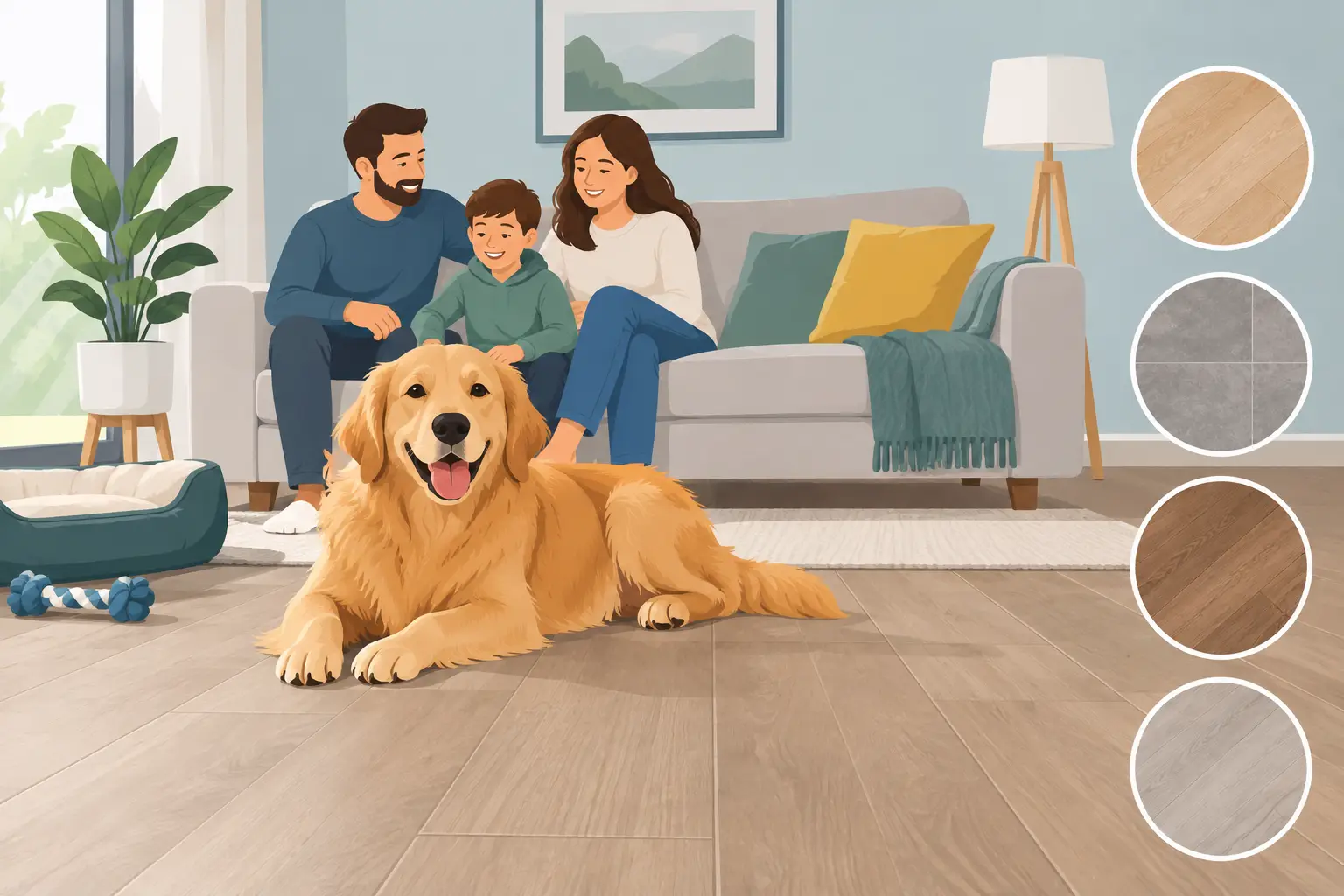
A wet dog shaking off after a Buckinghamshire walk can test a floor far more quickly than everyday family life. When choosing the best flooring for dogs UK homes can live with, the right answer is not simply the toughest-looking surface. It needs to cope with muddy paws, water bowls, claws, the occasional accident and plenty of cleaning, while still looking right in the rooms you have worked hard to improve.
For most dog-owning households, luxury vinyl tile, quality laminate and carefully chosen engineered wood are the main options worth comparing. Each has a place, but the best choice depends on where the floor is going, how active your dog is and whether a natural timber look is high on your list.
What dog owners should look for in a floor
Dogs bring a particular set of demands. Larger breeds and energetic dogs can leave fine scratches from claws, especially near doors, around feeding areas and on routes through the house. Rainy walks mean grit and moisture, while water bowls create regular splash zones. A floor with a realistic wood finish may look excellent on day one, but its construction and surface finish determine how it performs after several years.
Start with water resistance. This matters most in hallways, kitchens, utility rooms and open-plan living spaces with garden access. Next, consider scratch resistance, though no decorative floor is completely scratch-proof. A textured or matt finish tends to disguise small marks and dust better than a highly polished, dark floor.
Also think about comfort and grip. Very glossy surfaces can be slippery for older dogs or puppies finding their feet. A floor with a subtle texture gives better purchase without being difficult to clean. Finally, choose a style you will be happy to maintain. A pale, characterful oak design can hide light dust and dog hair well, whereas a near-black floor can show every paw print.
Best flooring for dogs UK homes: the leading choices
LVT is the practical all-rounder
Luxury vinyl tile, usually called LVT, is often the strongest all-round choice for busy homes with dogs. It is warm underfoot, water-resistant and available in a huge selection of wood and stone-effect designs. Good-quality LVT has a tough protective wear layer that stands up well to day-to-day scuffs, while individual planks or tiles can sometimes be replaced if a section is badly damaged.
It is especially well suited to kitchens, hallways, utility rooms and family rooms opening onto the garden. Spilled water and muddy footprints can be wiped away quickly, rather than becoming a reason to worry about swelling or staining. LVT is also quieter and more forgiving underfoot than ceramic tile, which can make a noticeable difference when a dog trots around the house.
The trade-off is that LVT is not real wood. Today’s premium designs are remarkably convincing, particularly when they include embossed grain and varied plank patterns, but homeowners who want the depth and individuality of timber may still prefer engineered wood in drier rooms. Preparation is also vital: LVT needs a suitably smooth, level subfloor to achieve its best finish.
Quality laminate offers excellent value
Modern luxury laminate is a sensible option when you want the appearance of wood at an affordable price. It is durable, easy to keep clean and generally handles claws well, particularly when you choose a quality product with a strong abrasion rating and a textured matt surface.
For a living room, dining room or bedroom, laminate can offer impressive value and a wide choice of colours, plank widths and oak effects. It is often a good fit for families who want a consistent look through several rooms without stretching the budget too far.
However, not all laminate is equally suitable for dogs. Standard laminate can be vulnerable at the joints if water is left sitting on the surface. Water-resistant laminate is a better choice for pet-owning homes, but it is still wise to wipe up spills promptly and use a mat beneath water bowls. If your entrance hall regularly sees dripping coats, wet leads and muddy paws, LVT may provide greater peace of mind.
Engineered wood brings genuine timber character
Engineered wood flooring is a strong choice where the look and feel of real timber matters most. It has a genuine hardwood top layer over a stable multi-layer construction, giving you the natural grain, warmth and variation that makes wood flooring so appealing. Compared with solid wood, it is generally more stable with changes in temperature and humidity, and many options can work with underfloor heating when specified correctly.
For dog owners, the finish and species make a real difference. Oak is popular because it is hardwearing, timeless and available in many tones. Brushed, smoked or character-grade boards can be particularly forgiving because their grain, knots and texture make minor everyday marks less obvious. A lacquered finish offers useful surface protection, while an oiled floor can be easier to touch up locally, although it needs regular care to keep it looking its best.
Engineered wood is not the best option for areas that experience frequent standing water. It can cope with normal household life and the odd splash when dealt with quickly, but wet paws should be dried rather than left to sit. It is best reserved for lounges, dining rooms, bedrooms and well-managed open-plan spaces rather than a hard-working utility room.
Solid wood needs a more considered approach
Solid wood flooring has a wonderful authenticity and can be refinished over its lifetime, but it requires more care around moisture and changing conditions. Water, grit and repeated wet paw traffic can affect the finish and, in some circumstances, the boards themselves.
That does not mean a dog owner cannot choose solid wood. In a dry sitting room with regular cleaning and a dog that is not constantly racing in from the garden, it can work beautifully. But for a whole-house renovation where practicality is the priority, engineered wood usually delivers a more manageable balance of natural character and everyday stability.
Match the floor to the room, not just the dog
A single flooring choice throughout the downstairs can create a smart, connected look, but it is not always the most practical plan. A water-resistant LVT in the hall and kitchen, paired with engineered oak in the living area, can give each space what it needs while keeping the overall colour palette consistent.
Think carefully about transition areas. The route from the back door to the kitchen is often the hardest-working part of a dog-owning home. A good doormat on both sides of the door, a washable runner and a dedicated place for towels will protect any floor more effectively than relying on material alone.
Bedrooms and upstairs spaces usually face less moisture, so this is where engineered wood or laminate may offer the look you want at the right price. For rental properties, durable water-resistant laminate or LVT can be particularly attractive because both are straightforward to clean between tenancies and cope well with general wear.
Small choices that make a big difference
Colour and finish have a bigger impact than many homeowners expect. Mid-tone oak shades are often the easiest to live with, concealing a mixture of dust, hair and minor marks better than very light or very dark finishes. Avoid a high-gloss surface if your dog has a habit of skidding around corners. A natural matt finish looks more relaxed and is usually more forgiving.
Installation is equally important. Gaps, poor subfloor preparation or unsuitable underlay can shorten the life of a floor, whatever material you choose. Make sure expansion requirements, moisture testing and compatibility with underfloor heating are considered before fitting begins. This is where seeing full-size samples and discussing your rooms with an experienced flooring specialist is far more useful than choosing from a small image online.
Keep claws trimmed, wipe up water promptly and vacuum or sweep grit regularly. Grit is one of the main causes of fine surface scratching, particularly near external doors. Felt pads under furniture and a proper mat beneath food and water bowls are simple protections that preserve the finish without changing the way your home feels.
See the difference before you decide
Photographs can make laminate, LVT and engineered wood look remarkably similar, but their texture, warmth and construction are much easier to judge in person. At Oakley Wood Timber, homeowners can compare a huge selection of premium wood flooring, luxury laminate and LVT in one place, with helpful staff on hand to talk through the practical details for their household.
Bring a photo of your room, a cupboard door or paint sample, and be honest about your dog’s habits. The floor that suits a calm terrier in a dry flat may not be the right one for two muddy Labradors with direct access to the garden. Choosing a surface you can see, touch and live with confidently will make those everyday paw prints feel like part of a well-used home, not a flooring disaster.