An Engineered Flooring Guide for Your Home
16 October 2026
A wood floor has to do more than look good under showroom lighting. It needs to cope with muddy shoes by the back door, chairs moving around the dining table, busy family mornings and changes in temperature through the year. This engineered flooring guide explains what you are buying, where it works best and the details worth comparing before you choose.
Engineered wood is a popular choice because it gives you the genuine character of timber with a construction designed for modern homes. There is a huge selection of colours, board widths, grades and finishes available, so the right floor can feel at home in anything from a period cottage to a contemporary extension.
What is engineered wood flooring?
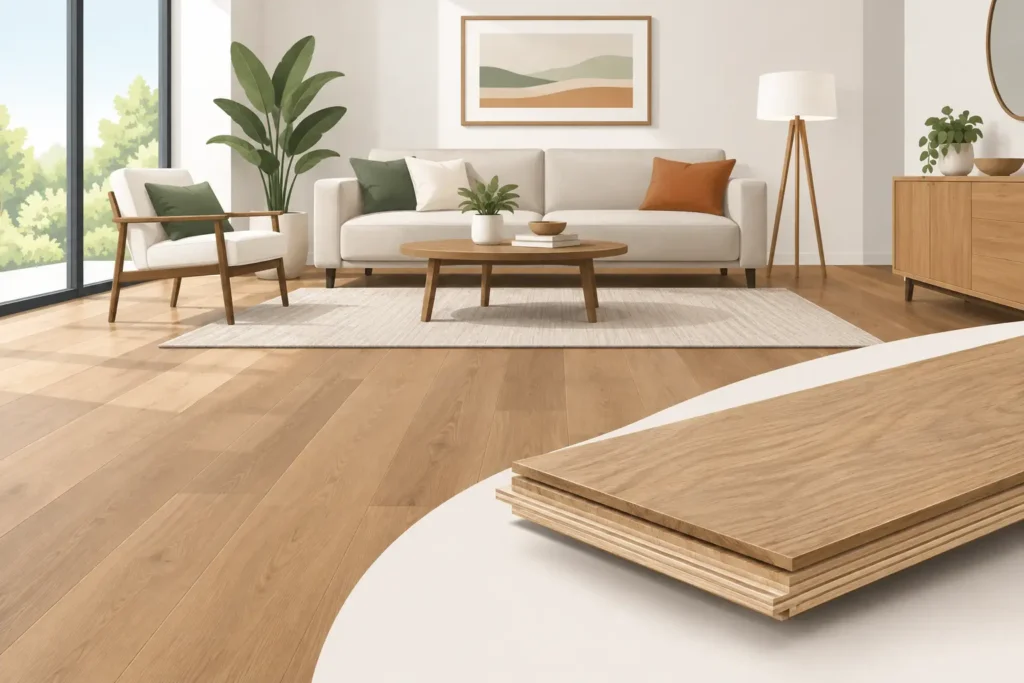
An engineered wood board has a real hardwood top layer, known as the wear layer, bonded to a stable base made from layers of timber or plywood. The top is the part you see and feel, so it has the natural grain, knots and variation that make real wood so appealing.
The layered construction is the key difference between engineered and solid wood flooring. Solid boards are made from one piece of timber and can react more noticeably to seasonal changes in humidity. Engineered boards are built to reduce that movement, making them a practical option in many rooms where solid wood may need more careful consideration.
This does not make engineered flooring artificial. It is real wood, and it should be treated accordingly. It can mark, fade slightly over time and develop a lived-in character. For many homeowners, that is precisely the appeal.
Engineered flooring guide: the details that matter
The appearance of a sample is only the starting point. Two oak floors may look similar at first glance yet perform differently because of their construction, finish and fitting method.
Wear layer thickness
The wear layer affects how much timber sits above the board’s core. A thicker wear layer generally offers more scope for careful sanding and refinishing in the future, although not every floor will ever need this work. It is a useful consideration for a long-term family home, a busy hallway or an open-plan kitchen where the floor will receive plenty of use.
For a less heavily used bedroom, the overall look, board quality and budget may matter more than choosing the thickest possible wear layer. Ask about the full board specification rather than relying on one figure alone.
Board thickness and core quality
A thicker board can feel more substantial underfoot and may work better where you need to meet an existing floor level. The quality of the core also matters. A well-made multi-layer plywood core provides excellent stability and gives the board a solid feel once fitted.
Do not assume that a thicker board is automatically the better choice. Your subfloor, door clearances, adjoining rooms and underfloor heating system all affect what will suit the project.
Plank width and length
Wide boards show off the grain beautifully and can make a larger room feel calm and generous. They are especially effective in open-plan spaces, where fewer joins create a cleaner visual flow. Longer planks have a similar effect.
Narrower boards can be a better fit for smaller rooms, older properties or more traditional interiors. They also introduce more pattern and movement. The best choice comes down to the proportions of the room, the amount of natural light and the look you want to achieve.
Choosing the right timber, grade and colour
Oak remains the most versatile choice for British homes. It is durable, characterful and available in everything from pale natural tones to rich smoked and dark stained finishes. Its grain works equally well with painted kitchen units, contemporary black metal details and classic internal doors.
The grade of the timber changes the overall character. Prime or select grades tend to have a cleaner, more uniform appearance with fewer knots. Rustic grades show more natural knots, colour variation and figuring. Neither is better. A clean grade suits a refined, pared-back scheme, while a rustic board brings warmth and a more relaxed feel.
Colour deserves careful thought too. Pale oak can make a room feel brighter, but very light floors may show dirt more readily in a busy entrance. Deep brown or smoked finishes create instant depth, although they can make a small, poorly lit room feel heavier. Mid-tone natural oak is often the forgiving middle ground, offering warmth without showing every mark.
Take samples home if possible and look at them beside your skirting, paint, kitchen units and furniture. A floor can change considerably between daylight, evening lighting and the lighting in a showroom.
Lacquered, oiled or brushed finishes?
The finish affects both the look and the maintenance routine of your floor. A lacquered finish creates a protective surface layer and is often a sensible, lower-maintenance option for family homes. Modern matt lacquers can retain a natural timber appearance without the glossy look some people wish to avoid.
An oiled floor gives a very natural, tactile feel and lets the grain stand out clearly. It can be easier to repair locally if it becomes marked, but it needs the correct ongoing care and periodic re-oiling. It suits homeowners who appreciate a floor that develops character and are happy to maintain it properly.
Brushed boards have had the softer grain removed from the surface, leaving texture that highlights the timber’s natural pattern. This can help disguise minor everyday marks, making it a practical and attractive choice for kitchens, dining spaces and homes with children or pets.
Where can engineered flooring be fitted?
Engineered wood works well in living rooms, bedrooms, hallways, dining rooms and many open-plan kitchen areas. The important point is preparation. A good floor relies on a dry, level and sound subfloor, as well as an appropriate moisture barrier or underlay where required.
It is often suitable over compatible underfloor heating systems, provided the product and installation method are approved for that purpose. The heating should be brought up to temperature gradually, and the surface temperature must remain within the manufacturer’s stated limit. This is one area where choosing on price alone can create problems later, so it is worth checking the details before ordering.
Bathrooms, wet rooms and areas with frequent standing water are not usually the natural home for engineered wood. Spills should always be wiped up promptly. If waterproof performance is the main priority, luxury vinyl tile may be a more suitable option while still offering a convincing timber effect.
Fitting method and preparation
Engineered boards may be floated over an underlay, glued directly to the subfloor or fitted using another approved method. The right approach depends on the board, subfloor and room conditions. Glue-down fitting can give a particularly solid feel underfoot and is often favoured for wider boards and underfloor heating, but it demands a properly prepared base.
Before fitting, the flooring should acclimatise in the room according to the manufacturer’s guidance. The subfloor must be checked for moisture, especially in new builds, extensions and properties where screed has recently been laid. Rushing this stage is one of the most common causes of avoidable flooring issues.
Remember to allow for expansion around the perimeter of the room. Wood moves naturally with the seasons, even when it is engineered for stability. Skirting boards, beading and door thresholds can then provide a neat finish without restricting the floor.
Looking after your new floor
Regular care is straightforward. Use a soft brush or vacuum suitable for hard floors to remove grit, as abrasive dirt is more damaging than most people realise. Clean with a well-wrung mop and a cleaner recommended for your floor’s finish, never soaking the boards with water.
Felt pads beneath chairs and furniture, mats at external doors and sensible care around pet claws will help protect the surface. If a mark does happen, act quickly rather than scrubbing aggressively. The correct repair method depends on whether the floor is lacquered or oiled.
A premium wood floor is a purchase you should feel confident about seeing in person. At Oakley Wood Timber, homeowners can compare a huge selection of engineered boards, see their true texture and colour, and speak to helpful staff with more than 30 years of experience. Bring photos, measurements and a sample of your paint or kitchen finish, then choose a floor that will still feel right when real life happens on it.