Luxury Laminate Flooring for Family Homes
12 October 2026
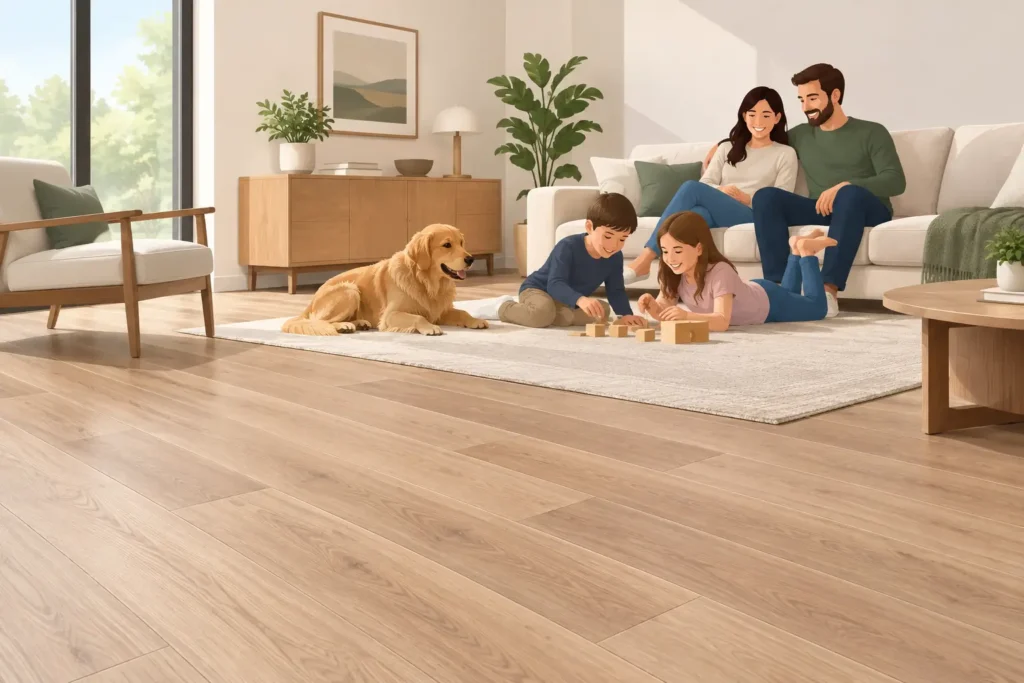
A family kitchen floor sees more of life than most surfaces in the house. Muddy shoes by the back door, dropped cereal bowls, a dog racing through after a walk and chairs pulled out for every meal all leave their mark. Luxury laminate flooring is designed for precisely this sort of home: it gives you a convincing timber appearance, a comfortable everyday surface and a more accessible price than many real-wood options.
The key is choosing a floor that suits the room, rather than simply picking the colour you like online. Plank size, texture, wear rating, water resistance and the quality of the fitting all affect how your new floor looks and performs over time. For homeowners planning a renovation across Buckinghamshire, seeing the boards properly before buying can make that decision far easier.
What makes luxury laminate flooring different?
Laminate has moved a long way from the shiny, repetitive finishes many people remember. Better printing technology, carefully matched surface textures and realistic bevelled edges now create boards that can closely resemble oak, walnut and other popular timber species. Some designs have knots, grain variation and an embossed texture that follows the pattern beneath your feet.
A quality laminate board is built in layers. A durable wear layer protects the decorative surface, while a stable core gives the board its strength and click-fit profile. The result is a practical floating floor that can be fitted efficiently over a suitable level subfloor.
The word “luxury” should mean more than a fashionable label. Look for a natural-looking décor with varied boards, a finish that feels considered rather than plasticky, and a construction suitable for the demands of the room. A premium-looking floor should still be a sensible purchase, especially in a busy household.
Why homeowners choose laminate
The main attraction is the balance of appearance, durability and cost. If you love the warmth of a wood-look floor but want a finish that is less precious around children, pets or everyday foot traffic, laminate deserves serious consideration. It is also easy to keep looking smart: regular vacuuming or sweeping, followed by a lightly damp mop recommended for laminate floors, is usually enough.
It can be particularly effective in living rooms, halls, dining spaces, bedrooms and home offices, where a continuous plank floor creates a clean, joined-up look. Light oak styles can make a darker room feel more open, while smoked, honey or rustic tones bring character to period properties and country-style interiors.
That said, laminate is not automatically the right answer everywhere. Standard laminate should not be treated like a fully waterproof floor. Spills need wiping up promptly, and areas subject to standing water need a product specifically designed for moisture resistance, fitted exactly to the manufacturer’s instructions. For bathrooms, utility rooms and households where water is a constant concern, LVT may be the more suitable choice.
A realistic wood look without the upkeep
Engineered wood flooring offers a real timber top layer and can be refinished in some cases, giving it a depth that laminate cannot reproduce completely. But it also asks more of its owner. Wood can mark, fade and react to changes in humidity, and it benefits from careful maintenance.
Luxury laminate flooring offers a more carefree alternative for many homes. It will not be sanded and restored in the way wood can, but its protective surface is made for everyday use. The choice often comes down to priorities: authentic natural material and a long-term refinishing option, or a highly convincing look with straightforward upkeep and lower initial outlay.
Choosing the right laminate for each room
Start with how the room is used. A peaceful guest bedroom has very different requirements from a hallway used by a family, visitors and a large dog. In high-traffic areas, choose a hard-wearing product with a strong wear rating and a finish that will not show every speck of dust or small scuff.
Colour deserves a practical thought too. Very dark floors can look striking, but may reveal pale pet hair and dust more readily. Very pale boards can create a modern, airy feel, though an overly uniform pale finish may look less natural in a traditional house. Mid-tone oak remains a favourite because it is forgiving, versatile and works with both painted and natural-wood furniture.
Board dimensions matter. Wider, longer planks can give an open-plan space a more generous feel and suit contemporary schemes well. Narrower boards can look at home in cottages, older properties and rooms where a more classic timber effect is wanted. Take samples into the room if possible, then look at them in daylight and under your evening lighting before making a final decision.
Think beyond the board itself
A good floor is never just the planks. Underlay affects comfort underfoot, sound reduction and the way a floating floor performs. The correct trims, door thresholds and matching skirting details help the finished job look intentional rather than improvised.
Subfloor preparation is equally important. Laminate needs a clean, dry and level base. It can bridge only minor imperfections, so significant dips or uneven areas should be dealt with before fitting starts. Rushing this stage can lead to movement, noise or gaps that are easily avoided with proper preparation.
If you have underfloor heating, check that both the laminate and underlay are approved for use with it. The system must be brought up to temperature gradually, and the floor should be acclimatised in the room before installation. These small details protect the product and give you the best chance of a stable, long-lasting result.
Laminate, engineered wood or LVT?
There is no single best flooring type for every renovation. Laminate is often the value-conscious choice for dry living areas where you want a hard-wearing wood appearance. It offers a huge selection of styles and can transform several rooms without stretching the budget as far as real wood.
Engineered wood is worth considering when the natural variation, texture and character of genuine timber are central to the scheme. It brings an unmistakable authenticity and can add real presence to a reception room, dining room or quality refurbishment project.
LVT is often the practical front-runner where water resistance is essential. It is quieter and softer underfoot than laminate, and its waterproof construction makes it well suited to kitchens, bathrooms and utility spaces. However, the look, feel and fitting method are different, so it is always worth comparing full boards rather than relying on small images.
See the difference before you decide
Flooring is a large visual surface, and photographs rarely show how a board catches the light, how much texture it has or whether its tone works with your doors, worktops and wall colours. A physical showroom gives you the chance to compare finishes side by side and place samples against the materials already planned for your home.
At Oakley Wood Timber, homeowners can view a huge selection of flooring in person, including luxury laminate, engineered wood, solid wood and LVT. With more than 30 years of experience, the helpful staff can talk through what will suit the room, your budget and the level of day-to-day wear your floor will receive. That personal guidance is especially useful when you are trying to create a consistent finish across a hall, living area and kitchen-diner.
Before ordering, measure carefully, allow for sensible cutting waste and check the product’s fitting requirements. It is also wise to order enough of the same batch for the full area, including any future repairs, as colours and patterns can vary between production runs.
A well-chosen laminate floor should make daily life easier while giving your home the warmth and character you want. Take time to walk on the boards, look at them in natural light and ask the practical questions before committing - the right choice will still feel right long after the fitting is finished.