Why LVT Flooring for Busy Families Works
1 October 2026
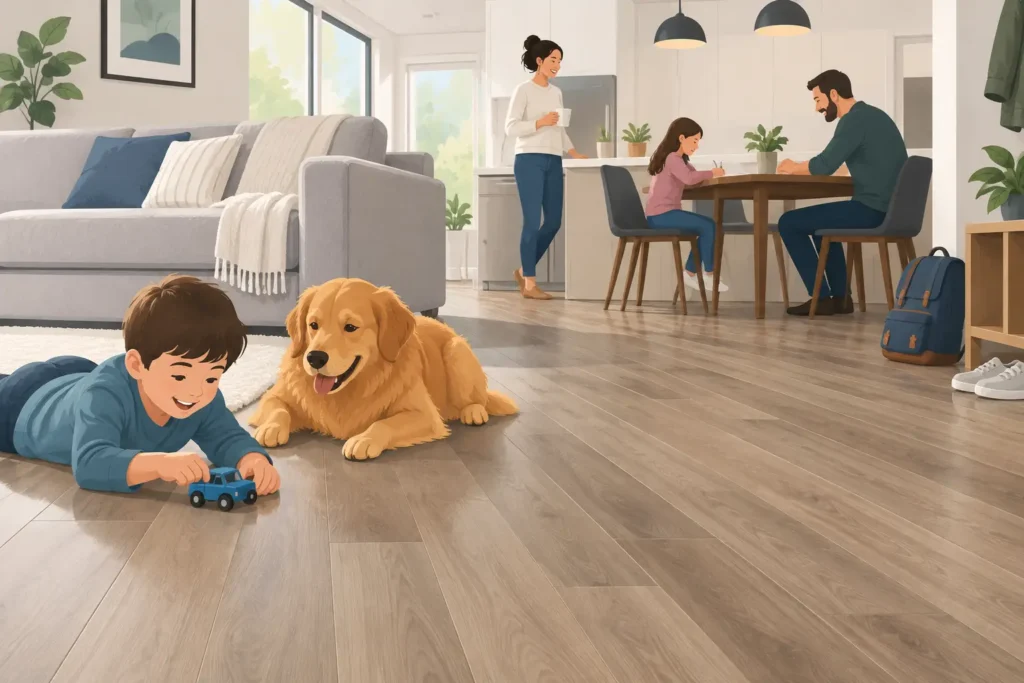
The morning rush puts a floor through more than most people realise. Wet shoes by the front door, dropped cereal in the kitchen, a dog racing in from the garden and chairs moving back from the table all leave their mark. That is why LVT flooring for busy families is such a popular choice: it offers the warm, considered appearance of wood or stone with a practical surface that is made for everyday life.
For households balancing work, school runs, pets and weekend visitors, a floor needs to look good without becoming another job on the list. Luxury vinyl tile, usually shortened to LVT, can be a very sensible answer - provided the product, finish and installation method suit the room.
What makes LVT a family-friendly floor?
LVT is designed in individual planks or tiles, with realistic printed layers that can recreate timber, stone, concrete and patterned tile effects. A protective wear layer sits over the design, helping the floor cope with scuffs, spills and regular footfall.
Its main appeal is not that it is indestructible - no floor is. Rather, it is forgiving. Muddy paw prints, splashes from the sink and most food spills can be dealt with quickly using a soft brush, vacuum suitable for hard floors, and a damp mop. There is no need for sanding, oiling or specialist wood care as part of normal maintenance.
That makes a real difference in high-use rooms. A carefully chosen oak-effect LVT can bring the character of a timber floor to an open-plan kitchen or family room, while coping better with the moisture and cleaning routine that come with that setting. Stone-effect designs can give a utility room or hallway a smart, hardwearing look without feeling as cold underfoot as real ceramic tile.
Where LVT flooring for busy families earns its keep
Hallways and entrances
The hallway is often the hardest-working part of the house. It receives grit from shoes, umbrellas, school bags and the repeated movement of people coming and going. LVT is easy to clean and available in many mid- to dark-toned wood and stone looks that are more forgiving of the occasional bit of dust between cleans.
A good entrance mat still matters. It reduces grit before it reaches the floor, which is worthwhile with any surface. For a family hallway, choose a finish with some texture or natural variation rather than a very pale, uniform design that will show every mark.
Kitchens, diners and open-plan rooms
Kitchens need a floor that handles spills calmly. LVT is water-resistant at the surface and is well suited to areas around sinks, dining tables and kitchen islands. It is also more comfortable to stand on than porcelain or natural stone, which is welcome when cooking for a crowd or clearing up after dinner.
In an open-plan room, the same floor can continue from kitchen to dining and living space, helping the whole area feel larger and more joined-up. Wood-effect planks are especially effective here, offering a relaxed, homely finish without the concern that comes with fitting natural timber in a splash-prone kitchen.
Utility rooms and downstairs cloakrooms
Utility rooms are practical spaces by nature, but that does not mean they need to feel like an afterthought. LVT can handle damp washing, pet bowls and the general mess that lands in a utility after a walk or sports session. A stone or slate effect works particularly well in these rooms, bringing a clean, tailored look that is simple to maintain.
For cloakrooms, LVT can be a useful alternative to cold tile. The room must be properly prepared and the floor fitted correctly, especially around sanitaryware, but it gives plenty of scope to use a bolder pattern or darker colour in a small space.
Comfort matters as much as toughness
Busy homes are not only busy on the surface. They are noisy too. LVT generally feels softer and quieter underfoot than ceramic or porcelain, which can make a noticeable difference when children are playing or the family dog is crossing the room repeatedly.
It is also a more comfortable choice for bare feet, particularly in ground-floor rooms. Some LVT ranges can be used with compatible underfloor heating, although this should always be checked against the manufacturer’s guidance before buying. The heating system, subfloor and maximum temperature all need to be suitable.
The trade-off is that LVT does not have the natural warmth, grain variation or ability to be refinished that real wood provides. If your priority is an authentic timber floor for a quieter living room, engineered wood may be the better fit. If the room has frequent spills, high footfall and family life happening at full pace, LVT often gives greater peace of mind.
Choosing the right LVT construction
Not all LVT is the same, and this is where looking at samples in person pays off. The thickness of the product, wear layer, backing, locking system and installation method all affect how the floor will perform and feel.
Click LVT uses a locking joint, allowing planks or tiles to fit together as a floating floor. It can be a convenient choice for certain projects and is often popular where speed of installation is a priority. Glue-down LVT is fixed directly to a prepared subfloor. It can offer a very secure, stable finish and is a strong option for larger areas, rooms with heavy use or layouts where a continuous fitted appearance is wanted.
There is no single right answer. The condition of the subfloor is often the deciding factor. LVT follows the surface beneath it, so dips, ridges and uneven areas may show through over time. Proper subfloor preparation is not an optional extra; it is a key part of achieving a floor that looks good and lasts well.
For family homes, it is worth considering a design with an embossed texture and a realistic matt finish. These details can make a wood or stone effect look more convincing, while also helping to disguise the small signs of daily use. A wider plank can suit open-plan spaces, while herringbone LVT adds more visual interest in a hall, dining area or kitchen.
Colour and style choices that live well
A floor should suit the way your home is used, not just how it looks in a small sample. Very light colours can brighten a room beautifully, but may show muddy marks more readily in an entrance or utility. Very dark floors can make dust, pet hair and footprints more visible. Mid-oak, natural beige, warm grey and varied stone tones are often the most practical middle ground.
Wood-effect LVT remains a favourite for family spaces because it works with both traditional and contemporary interiors. Soft oak shades pair easily with painted kitchen units, while richer timber effects can give a newer extension a more established feel. Stone and concrete effects suit modern kitchens, boot rooms and cloakrooms, especially when a clean, architectural look is preferred.
Take home samples where possible and view them in the actual room. Daylight, artificial lighting, wall colour and adjoining furniture can all change how a floor appears. It is also sensible to place samples next to kitchen units, doors and skirting boards before making a final choice.
Everyday care without the fuss
LVT is low-maintenance, not no-maintenance. Sweep or vacuum regularly to remove grit, wipe spills promptly and use a cleaner approved for vinyl flooring when needed. Avoid harsh abrasives, steam cleaners unless the manufacturer specifically permits them, and products that leave a slippery residue.
Felt pads under dining chairs and furniture feet are a straightforward way to prevent avoidable scratches. Use protective cups under very heavy furniture, and take care when moving appliances. In sunny rooms, blinds or curtains can help reduce prolonged direct sunlight, which is sensible for any interior surface.
See the difference before you decide
Photographs are useful for inspiration, but flooring is something you live with underfoot every day. Seeing the scale of a plank, feeling the texture and comparing colours side by side makes the choice much easier. At Oakley Wood Timber, homeowners can explore a huge selection of flooring in the showroom and speak to helpful staff who understand the practical differences between LVT, laminate and premium wood flooring.
Bring measurements, photographs of the room and an idea of how the space is used. A young family with a large dog, for example, may need a different finish from a couple renovating a low-traffic dining room. The best choice is the one that makes your home feel right while leaving you more time to enjoy it.