Wide Plank Engineered Wood Flooring Explained
1 October 2026
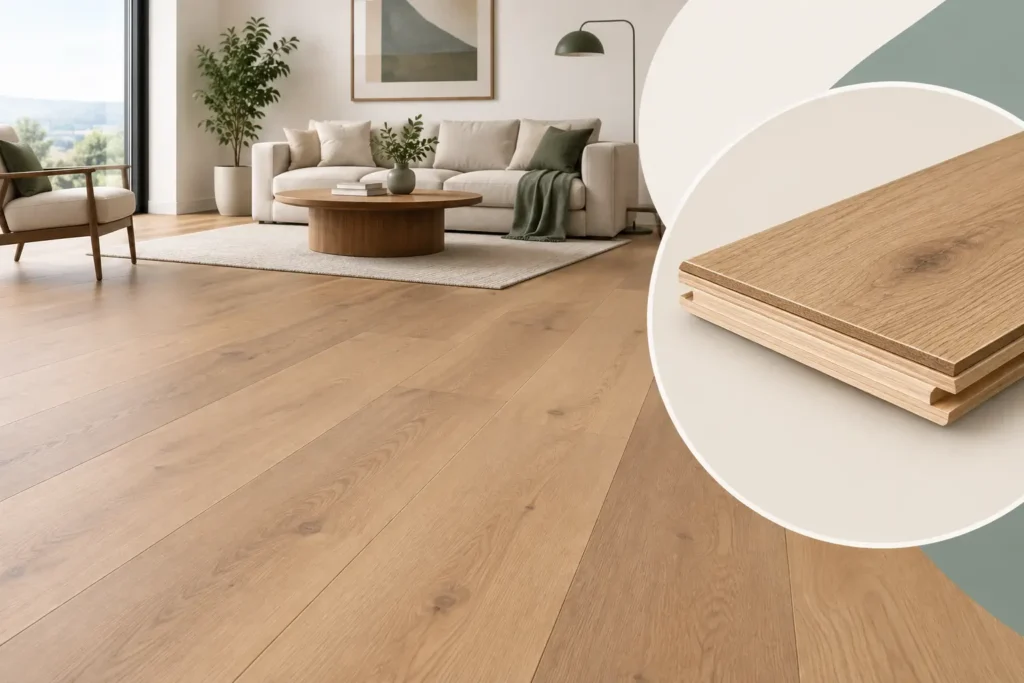
A narrow board can make a floor feel busy. Wide plank engineered wood flooring does the opposite: it gives the grain room to breathe, creates cleaner visual lines and brings a more settled, generous feel to a room. It is a popular choice for homeowners who want the warmth and character of real timber without choosing a floor that is impractical for everyday family life.
For renovations, extensions and self-build projects, it can be one of the most effective ways to make a space feel considered from the ground up. The right board width, timber grade and finish matter just as much as the species itself, so this is a product worth seeing properly before making a decision.
Why wider boards make such a difference
A wide plank shows more of the natural movement in the timber. Knots, grain patterns and colour variation are not broken up into lots of short, narrow strips, which means each board becomes part of the design. In an open-plan kitchen, a hallway or a large sitting room, that creates a calm, high-quality look that works particularly well with modern interiors, period properties and country homes alike.
There is also a useful visual effect. Fewer joins across the width of the room can make the floor appear less fussy and, in many cases, make a space feel broader. Longer planks can add to this effect by drawing the eye through the room. That said, wider is not automatically better in every property. A very wide board in a compact, awkwardly shaped room can sometimes feel out of scale, while a medium-wide plank may provide a better balance.
The character of the timber becomes more noticeable too. If you enjoy the detail of real oak, including its natural knots and tonal shifts, wide boards give you more of it to look at. If you prefer a quieter, more uniform appearance, choose a select-grade board or a finish with less visible variation.
What engineered wood flooring is made for
Engineered wood is real wood flooring, not a printed imitation. It has a top layer of genuine hardwood, often oak, bonded to a stable multi-layer base. This construction is designed to cope better with normal changes in household temperature and humidity than a traditional solid wood board.
That stability is a major reason it is so well suited to contemporary homes. It is commonly specified over underfloor heating when the flooring and heating system are approved for use together, and it is a practical option for ground-floor rooms where a solid wood floor may need more careful consideration. The timber surface still has the texture, warmth and individuality people expect from a premium wood floor, but the construction offers more flexibility for modern living.
It is not indestructible. Wood can mark if heavy furniture is dragged across it, and standing water should always be dealt with promptly. In a busy home, however, a well-chosen engineered floor is highly manageable. Entrance mats, felt pads under chairs and a sensible cleaning routine will protect the finish and keep it looking its best.
Choosing wide plank engineered wood flooring
The best choice starts with the room, not just the sample. Think about natural light, how the room is used and the colours already present in cabinetry, worktops, doors and furniture. A floor that looks pale and calm in a bright showroom can appear warmer at home, while a dark stain can look striking in a light-filled room but may show dust and everyday marks more readily.
Board width and length
Widths vary considerably, but the broadest options are generally best appreciated in larger rooms and open layouts. They suit homeowners looking for fewer visible seams and a more architectural finish. In smaller rooms, a wide board can still work beautifully, particularly when laid lengthways towards the main source of light or along the longest dimension of the space.
Board length deserves equal attention. Random-length packs tend to look natural and traditional, while longer boards give a more continuous, contemporary appearance. It is useful to view several boards together rather than judging a floor from one small piece. This reveals the real mix of tones, grain and knots you will see once the floor is laid.
Grade, grain and colour
Rustic-grade oak is full of personality. Expect knots, filled splits and noticeable colour changes, all of which give the floor a relaxed, lived-in character. It is a strong fit for family homes, barn conversions and properties where natural materials are part of the appeal.
Select or prime-grade oak has fewer knots and a cleaner grain pattern. It can suit more formal schemes and contemporary interiors where you want wood warmth without too much variation. Neither is better than the other. The right choice is the one that looks at home with the rest of your interior.
For colour, natural oak remains a dependable favourite because it works with almost anything. Smoked, toasted and darker brown finishes bring depth, while pale brushed boards can make rooms feel airy without the cooler look of a grey floor. Grey tones are still available, but it is worth choosing a shade you genuinely enjoy rather than following a short-lived trend.
Finish and texture
Brushed and oiled boards are popular because they enhance the grain and give the timber a tactile, low-sheen appearance. They are often forgiving of the small signs of daily life and can be maintained with suitable care products. Lacquered finishes offer a more protected surface and can be a practical choice where easy routine cleaning is the priority.
A matt finish usually looks more natural than a high-gloss floor and works well across both traditional and modern settings. Handscraped or heavily textured boards create a more rustic effect, but they are a style choice rather than a necessity. If you are unsure, bring samples alongside your paint colours, kitchen door sample or worktop material and compare them in the same light.
Installation details that should not be overlooked
Even a beautiful floor needs the right preparation. The subfloor must be sound, level and dry, and a professional installer should assess its condition before work begins. Moisture is especially important on concrete subfloors. Rushing this stage can lead to avoidable problems later, regardless of the quality of the boards.
Wide planks are often installed by fully bonding them to the subfloor, which gives a solid underfoot feel and can reduce movement. Some products may be suitable for a floating installation, but this depends on the board construction, the subfloor and the manufacturer’s fitting guidance. Underfloor heating adds another layer of planning: the system must be commissioned correctly, operated gradually and kept within the recommended surface temperature.
Allow for expansion around the perimeter of the room and plan the finishing details early. Skirting, beading, thresholds and stair nosings all affect the final result. These are small decisions on paper, but they are what make a new floor look properly finished rather than simply fitted.
See the full boards before you buy
Wood is naturally variable, and that is its strength. Photographs and small swatches can point you in the right direction, but they cannot fully show the texture, grain pattern or scale of a wide board. Seeing flooring laid out in person makes it easier to compare widths, finishes and grades with confidence.
At Oakley Wood Timber, homeowners can explore a huge selection of premium wood flooring in a showroom setting, with helpful staff on hand to talk through the practical details. With more than 30 years of experience, the team can help narrow down choices that suit the room, the household and the budget - without making the process more complicated than it needs to be.
A wide plank floor should feel right when you see it under proper light and alongside the materials already going into your home. Take the time to handle the boards, compare a few honest options and choose the one you will still be pleased to come home to years from now.