Vinyl Flooring vs Tile: Which Suits Your Home?
18 October 2026
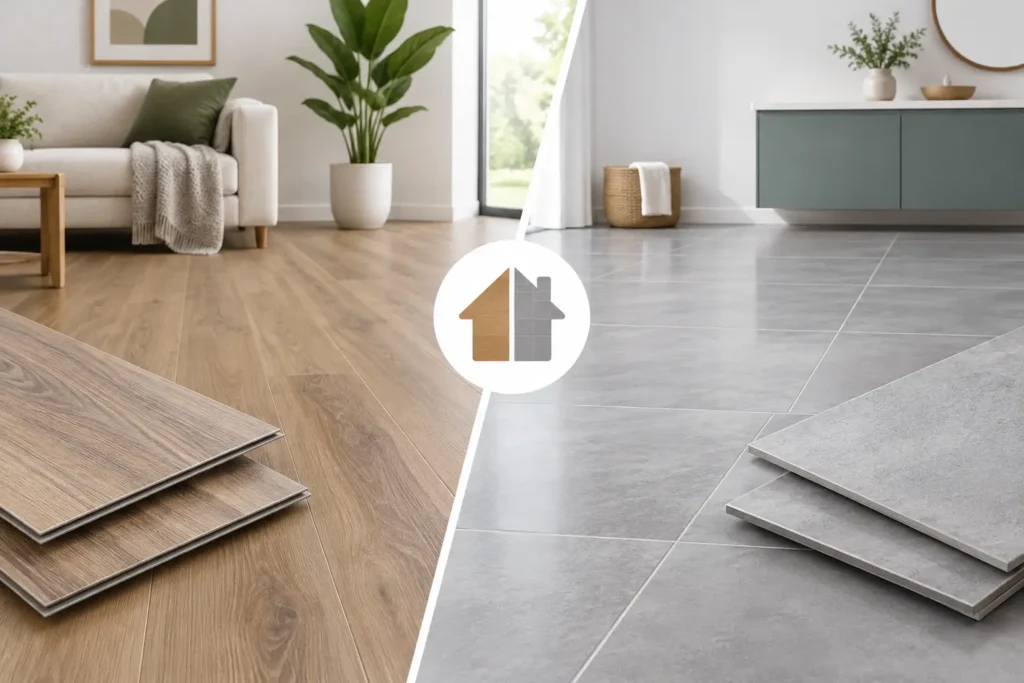
A wet pair of school shoes by the back door, a dropped saucepan in the kitchen or a busy family bathroom can quickly show whether a floor is right for the room. When comparing vinyl flooring vs tile, both are practical choices for areas where water, mess and regular cleaning are part of daily life. The better option is not simply the one that looks best in a sample. It is the one that suits how your household uses the space.
Tile has long been valued for its hard-wearing surface and clean, solid appearance. Modern vinyl, particularly luxury vinyl tile (LVT), has changed the conversation. It can recreate the look of timber, stone or concrete convincingly while feeling warmer and softer underfoot. Each has clear strengths, but there are trade-offs worth considering before you commit.
Vinyl flooring vs tile: the key differences
The main difference is in the material itself. Ceramic and porcelain tiles are rigid, mineral-based products fixed to a prepared subfloor with adhesive and grout. Vinyl flooring is a resilient surface, available in sheet vinyl, vinyl planks and vinyl tiles. LVT is normally fitted as individual planks or tiles, either glued down or clicked together, depending on the range.
That difference affects almost everything: how the floor feels, how it is installed, how it handles impacts and what preparation it needs. Tile generally gives a more permanent, architectural finish. Vinyl offers a more forgiving, comfortable surface and often provides greater design flexibility at a lower fitted cost.
Appearance and style
Porcelain tile remains difficult to beat if you want a crisp stone, marble or large-format concrete effect. It works especially well in contemporary kitchens, bathrooms and open-plan spaces where you want the floor to feel substantial. A carefully chosen tile can also carry through from an indoor kitchen to a conservatory or porch, creating a cohesive finish.
Vinyl has a much broader range of wood-look designs. Good-quality LVT can bring the character of oak boards, herringbone layouts or pale washed timber into rooms where real wood would not be the most practical choice. It is also available in realistic slate, stone and patterned tile effects.
The important point is to view samples in the room where they will be used. Light from a north-facing kitchen, warm artificial lighting and cabinet colours can all change how a finish appears. A large board or tile sample tells you far more than a small image on a screen.
Comfort and warmth underfoot
Vinyl is noticeably warmer and softer than tile. That matters in a kitchen where someone may be cooking for an hour, or in a bathroom where bare feet meet the floor first thing in the morning. Its slight give also makes it more forgiving if glassware or crockery is dropped.
Tiles naturally feel cooler and harder. Some homeowners like that solid feel, particularly in bright rooms that receive plenty of sun. In colder months, however, an unheated tiled floor can feel uncomfortable. Underfloor heating is a popular solution and works very effectively beneath suitable porcelain or ceramic tile.
Many LVT products can also be used with underfloor heating, provided the manufacturer’s temperature limits and fitting guidance are followed. Vinyl warms up more quickly at the surface, while tile retains heat for longer once the heating is running. If underfloor heating is part of the plan, confirm compatibility before choosing either floor.
Water resistance is not the whole story
Both tile and quality vinyl are suitable for kitchens, utility rooms, cloakrooms and bathrooms, but their response to water is different.
Porcelain tile is highly water-resistant, and ceramic tile performs well when properly installed. The potential weak points are the grout lines, edges and sealant around baths, showers and pipework. Grout can discolour over time and may need periodic cleaning or refreshing. In a wet-room setting, the full floor build-up and waterproofing system matter as much as the visible tile.
Vinyl has a water-resistant surface, and many LVT ranges are described as waterproof. This means spills can be wiped away without harming the material. It does not mean every installation is automatically suitable for standing water or failed plumbing. Water can still find its way through poorly sealed edges, gaps or joins, especially with click flooring.
For a family bathroom, well-fitted vinyl can be an excellent choice. For a fully tanked shower room or a space with frequent pooling water, tile is often the more dependable long-term option when installed correctly.
Durability, scratches and repairs
Tile is extremely durable against wear and can last for decades. Porcelain, in particular, is a strong choice for entrances, kitchens and busy households. It is resistant to scratches from everyday traffic, though a sharp impact can chip an edge or crack a tile. Replacing one damaged tile is possible, but it is much easier if spare tiles have been kept from the original batch.
Vinyl stands up well to normal family life, but it is not indestructible. Its wear layer protects the decorative surface, so choosing a product with a suitable wear layer for the room is worthwhile. Heavy appliances, dragging furniture and sharp grit from outside can mark lower-grade vinyl. Felt pads, entrance mats and sensible furniture moving make a real difference.
A benefit of plank or tile-format LVT is that a damaged section may be replaceable. The ease of repair depends on whether it has been glued down or clicked together, and on access to matching stock. Sheet vinyl is more difficult to repair invisibly if it is deeply cut.
Cleaning and everyday upkeep
Vinyl is usually the easier floor to live with. Vacuum or sweep it regularly, then clean with a well-wrung mop and a suitable cleaner. Avoid soaking the floor and do not use abrasive pads or harsh products that can dull the finish.
Tiles are straightforward to wipe clean, but grout asks for more attention. Pale grout in a kitchen or hallway can show marks quickly, while textured tiles may hold onto dirt more than a smooth surface. Choosing a practical grout shade and keeping on top of cleaning will make a tiled floor look better for longer.
If low-maintenance is the priority, vinyl generally has the advantage. If you value a hard surface that can take years of scrubbing and still look smart, porcelain tile deserves serious consideration.
Cost and installation: look beyond the price per square metre
Vinyl is often the more affordable route, particularly when compared with premium porcelain and the labour involved in tiling. However, the final cost depends on the product, room shape, subfloor condition and installation method. A cheaper vinyl floor fitted over an uneven base can show every imperfection, so preparation should never be treated as an optional extra.
Tiles can cost more to install because the process is slower and more labour-intensive. The subfloor must be stable and level, adhesive must be chosen correctly, and grout and edge trims need careful finishing. Large-format tiles and intricate patterns can add further labour.
LVT also needs a smooth, dry and level base, especially glue-down ranges. Click LVT may look like a quicker option, but it still needs a sound subfloor and expansion allowance. Ask for a proper assessment rather than relying on a price per square metre alone. A well-prepared floor is the foundation of a good result, whichever surface you choose.
Which rooms suit each option?
Vinyl is a strong all-round choice for a kitchen, utility, cloakroom, family bathroom or home office. It is comfortable, quieter than tile and available in wood effects that can soften a practical room. It can be particularly useful where you want a consistent timber-look floor through several connected spaces without worrying about occasional splashes.
Tile is ideal where a cool, clean and permanent finish is the priority. Bathrooms, entrance halls, sunrooms and kitchens with underfloor heating are natural fits. It also suits homeowners who prefer real stone-style texture and do not mind the extra upkeep that grout can bring.
For landlords or renovation projects, the decision may come down to budget, timescale and the expected level of wear. For a long-term family home, think about comfort as well as appearance. The floor is one of the few surfaces you use every day, often barefoot.
See the difference before you decide
The best comparison happens in person. A tile may feel too cold for one home but exactly right for another; a vinyl plank may look remarkably convincing in a large sample yet not suit the cabinet colour beside it. At Oakley Wood Timber, our helpful staff can talk through room use, subfloor considerations, underfloor heating and the finishes that will work with the rest of your interior.
Bring a cabinet door, paint sample or photograph of the room when you visit the showroom. Seeing a huge selection of flooring side by side makes it easier to choose a finish you will still be pleased with after the school run, Sunday lunch and years of everyday life.