Waterproof Laminate Flooring for Kitchens
30 September 2026
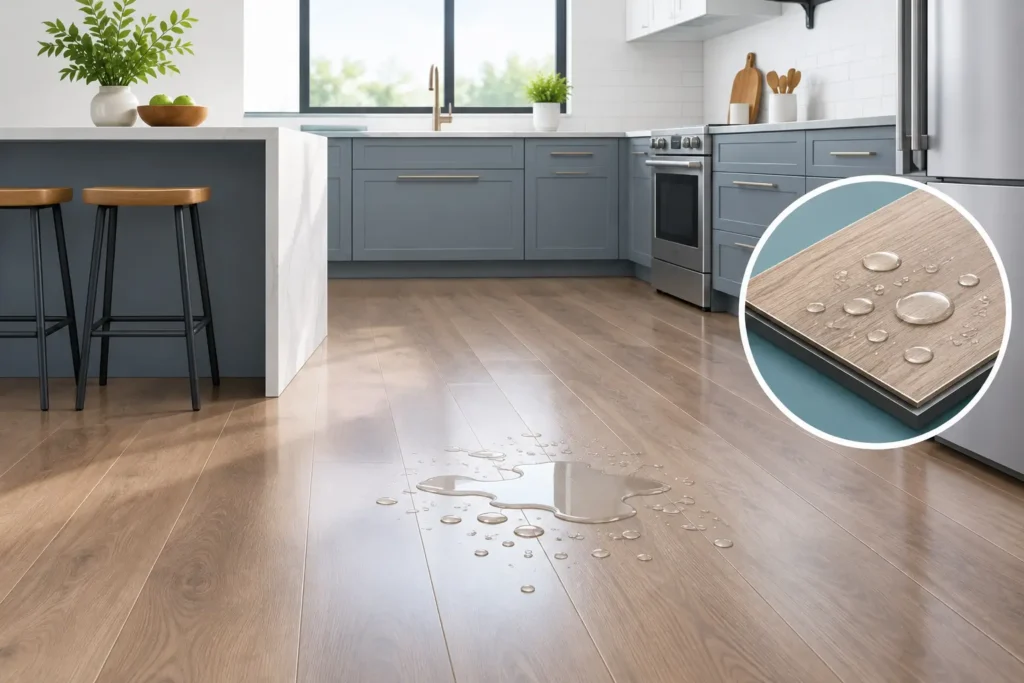
A kitchen floor has to cope with more than its fair share: muddy shoes by the back door, dropped pans, splashes at the sink and the occasional overenthusiastic family meal. Waterproof laminate flooring for kitchens gives homeowners the warm, detailed look of timber while providing a more practical surface for everyday living.
For many Buckinghamshire homes, it is a sensible middle ground. It can deliver the character of oak, herringbone or contemporary pale timber at an affordable price, without the maintenance expectations of a real wood floor. The key is choosing a genuinely water-resistant product that suits the room, household and installation conditions.
What waterproof laminate means in a kitchen
The term waterproof can be confusing, because not all laminate flooring offers the same level of protection. Standard laminate is made with a high-density fibreboard core. If water gets into the joins or sits on the surface for too long, that core may swell, causing raised edges or permanent damage.
Kitchen-suitable waterproof laminate is designed to reduce this risk. It usually has a tightly sealed click system, treated board edges and a water-repellent surface layer. Many ranges are tested to withstand spills for a stated period, often 24 or 48 hours. That gives you valuable time to wipe up water from a dishwasher leak, a knocked-over bowl or wet footwear before it reaches the core.
It does not mean the floor should be treated like a wet room surface. Standing water should still be removed promptly, and a major plumbing leak can damage almost any floor finish if it is left unattended. The practical benefit is day-to-day reassurance, not a reason to ignore moisture altogether.
Choosing waterproof laminate flooring for kitchens
Start with the way your kitchen is used. A quiet kitchen in a two-person household has different demands from an open-plan space used by children, pets and regular guests. Board thickness, surface texture and wear rating all matter, but the quality of the water protection and the fitting are especially important.
A thicker laminate board can feel more solid underfoot and may help disguise small imperfections in the subfloor. However, it is not automatically more waterproof. Look closely at the manufacturer’s stated spill protection, the locking mechanism and whether the range is approved for kitchens. A good product specification should make this clear rather than relying only on a broad waterproof claim.
The surface finish is equally worth considering. Embossed grain textures and matt finishes tend to look more convincing and are forgiving of everyday marks. Very smooth, dark boards can show dust, footprints and water spots more readily, particularly in a bright room with patio doors. A mid-oak, natural oak or soft grey tone is often an easy choice for busy family kitchens because it balances warmth with practicality.
Board format changes the feel of the room. Wide planks give a calm, modern look and make open-plan kitchens feel expansive. Narrower boards provide more traditional detail, while herringbone laminate can create an impressive focal point in a kitchen-diner. It is worth remembering that patterned layouts may involve more fitting time and material allowance than straightforward plank installations.
Match the floor to the kitchen design
Laminate is available in far more than the familiar golden oak look. Pale timber effects work particularly well with shaker kitchens, painted cabinetry and light worktops. Smoked oak or walnut-effect designs can bring depth to a larger kitchen with plenty of natural light. Grey tones suit contemporary schemes, although warmer greys generally feel more inviting than cooler, blue-based shades.
Consider the floor alongside cabinet doors, handles, worktops and adjoining rooms rather than as an isolated sample. A small swatch can look very different once it is laid across a full kitchen floor. Viewing larger boards in person helps you judge the grain pattern, texture and colour variation properly.
If your kitchen opens into a dining or living area, using one floor throughout can make the space feel more connected. Waterproof laminate is particularly useful here because it maintains a consistent timber appearance from cooking space to seating area, while coping with the more demanding kitchen zone.
Installation matters as much as the board
Even the best kitchen laminate can disappoint if it is installed over an unsuitable subfloor or without the correct expansion allowance. The subfloor needs to be clean, dry, level and stable. Uneven areas can put pressure on click joints, leading to movement, noise or gaps over time.
Laminate naturally expands and contracts slightly with changes in temperature and humidity. Fitters allow for this at the perimeter, then cover the gap with skirting or a suitable beading. It should not be pinned tightly beneath fixed kitchen units or heavy islands, as this can restrict movement and cause the floor to lift.
In a kitchen, pay particular attention to the areas around sinks, dishwashers and external doors. A professional installer will follow the product guidance on sealing or finishing edges where appropriate. Do not assume that silicone around every edge is always the answer - some laminate systems have specific instructions, and incorrect sealing can interfere with natural movement or affect a warranty.
Allowing the flooring to acclimatise in the home before fitting is another small but worthwhile step. Keep unopened packs flat in the room for the recommended period, away from direct heat and moisture. This helps the boards adjust to the conditions in which they will be used.
Underlay and underfloor heating
The right underlay supports the flooring and can improve comfort, acoustics and thermal performance. It must suit both the subfloor and the chosen laminate. A moisture barrier may be required over certain concrete subfloors, but this is not a substitute for resolving an underlying damp problem.
Many modern waterproof laminate ranges can be used with water-based underfloor heating, provided the manufacturer permits it and temperature limits are followed. This can be an excellent combination in a kitchen, where a floor that looks like wood can still feel comfortable on cold mornings. Always check compatibility before buying, as requirements differ between products.
When laminate is the right choice - and when it is not
Waterproof laminate is a strong option for homeowners who want a realistic wood appearance, a hard-wearing surface and good value. It is generally easier to maintain than timber, resists everyday scratches well and offers a huge selection of colours and plank styles.
That said, it is not the answer for every project. If a room is regularly exposed to large volumes of water, such as a busy utility room with a known leak risk, LVT may be the safer choice because its construction is inherently less vulnerable to water. LVT can also be preferable where you want a softer feel underfoot or a fully waterproof floor covering.
Engineered wood remains a compelling option for those who value the natural variation and depth of genuine timber. It can work beautifully beside a kitchen, particularly in open-plan homes, but it needs more careful moisture management. The choice depends on whether your priority is authentic wood, maximum spill resistance, budget or long-term repairability.
Everyday care that protects the finish
Kitchen laminate does not need complicated maintenance. Sweep or vacuum regularly using a hard-floor setting to remove grit, which can gradually dull the surface. Clean with a well-wrung microfibre mop and a laminate-approved cleaner rather than soaking the floor. Steam mops and wet mops are best avoided unless the flooring manufacturer specifically says otherwise.
Wipe spills quickly, especially around the sink and dishwasher. Use doormats at entrances, felt pads beneath movable furniture and protective pads under pet bowls. These straightforward habits help preserve the finish and keep the floor looking smart for longer.
A kitchen floor is a decision you will see and use every day, so samples and specification sheets only tell part of the story. At Oakley Wood Timber, homeowners can compare a huge selection of flooring in person and speak with helpful staff who understand how products perform in real family homes. Bring a cabinet door, worktop sample or a few room photographs, and choosing the right finish becomes a much simpler conversation.