Butcher Block Versus Laminate Worktops Compared
13 November 2026
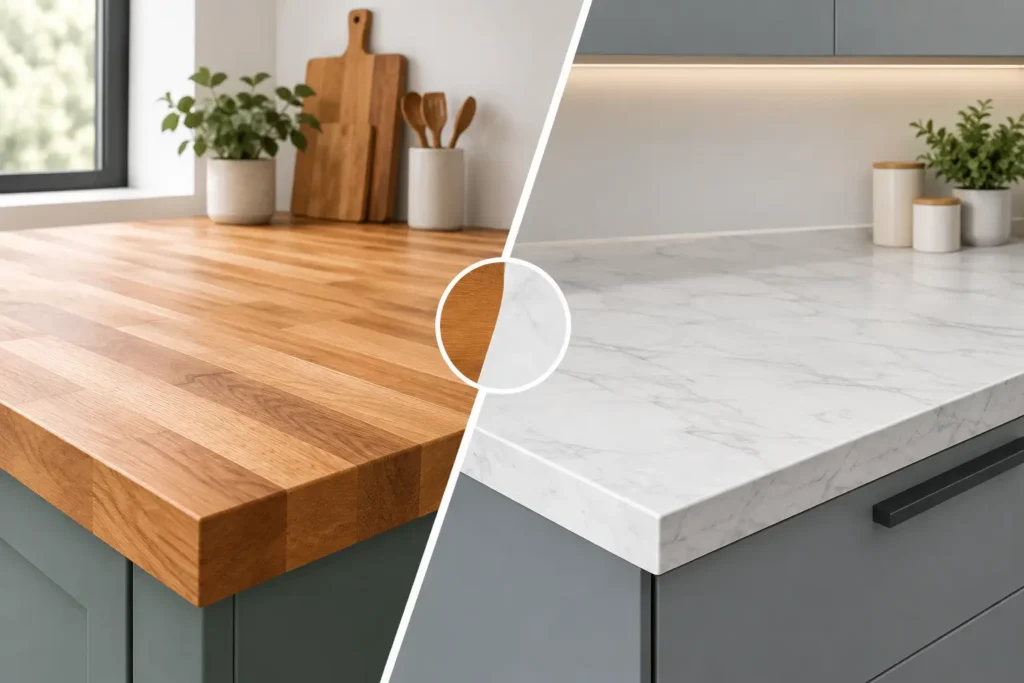
A worktop has to cope with far more than it gets credit for: hot mugs left by the kettle, school bags dropped after tea, pastry making, washing-up and the occasional hurried repair job. When comparing butcher block versus laminate worktops, the best choice is rarely about one material being universally better. It is about how you use your kitchen, how much maintenance feels realistic and the look you want to live with every day.
Butcher block brings genuine timber character and can be restored over time. Laminate offers huge design choice, straightforward care and strong value for a busy household. Both can create a handsome, practical kitchen - provided they are selected with clear expectations.
Butcher block versus laminate worktops: the key difference
Butcher block worktops are made from real wood, usually formed from strips of timber bonded together to create a solid surface. Oak is a popular choice for its grain, warmth and hard-wearing nature, while other species can offer a lighter or deeper tone. Every piece has natural variation, including knots, grain movement and colour changes, so no two installations are exactly alike.
Laminate worktops have a durable decorative surface bonded to an engineered board core. Modern laminate is a world away from the basic designs many people remember. It can convincingly reproduce oak, stone, concrete, marble and contemporary plain colours, often with textured finishes that make the surface feel more convincing in person.
That difference in construction affects almost every practical decision. Timber is a natural material that needs periodic care but can be sanded and refreshed. Laminate is designed for low-maintenance use, but deep damage is harder to disguise or repair. The right answer depends on whether you value authentic material and renewal, or simplicity and predictable day-to-day care.
The look and feel of real wood
A butcher block worktop gives a kitchen immediate warmth. It works particularly well with painted shaker doors, soft neutral schemes, country kitchens and homes where natural flooring, internal doors or exposed timber details are already part of the character. In a newer kitchen, wood can also soften a run of sleek cabinetry and prevent the room feeling overly clinical.
The appeal is tactile as well as visual. Timber has a depth, texture and natural movement that a printed surface cannot fully duplicate. With use, it develops a gentle patina. For many homeowners, that lived-in quality is part of the reason to choose it.
There are practical design choices within timber too. A full run of wood worktops makes a strong statement, but a timber breakfast bar or island paired with another main worktop can be a sensible compromise. It introduces warmth where people gather without putting wood around every sink and hob.
Laminate has the advantage where a precise, coordinated finish is the priority. A pale oak effect can complement wood flooring without making the kitchen feel too timber-heavy. Stone and marble effects offer a more formal or contemporary direction at an accessible price, while dark matt surfaces can look sharp alongside modern handleless doors. Because there is such a huge selection of decors, it is often easier to find a laminate that suits an existing kitchen scheme.
Daily care: where the decision often lands
Laminate is generally the easier option for a family kitchen, rental property or utility room. Wipe spills promptly with a damp cloth and mild cleaner, avoid harsh scourers, and it will look smart with little effort. Its sealed top surface is well suited to everyday food preparation, muddy paws, packed lunches and regular cleaning.
Wood needs more attention. It should be treated with a suitable worktop oil before use and re-oiled when the surface begins to look dry or loses its water resistance. The frequency varies with the product, position and level of use, but areas around the sink often need the closest attention. This is not a difficult job, although it is a commitment that should be accepted before buying.
Neither surface should be treated as indestructible. Use trivets for hot pans, chopping boards for knife work and wipe standing water away, particularly at joins, cut-outs and sink edges. A laminate worktop can swell if water gets into an exposed board core. Wood can stain, mark or move if it is repeatedly soaked or poorly maintained.
If you want a kitchen surface that needs the least possible thought after fitting, laminate usually wins. If you enjoy caring for natural materials and like the idea of restoring the surface rather than replacing it, butcher block remains a very rewarding option.
Durability and repairability
Timber worktops are resilient, but they will show life. Small dents, fine scratches and darker areas near the sink are normal signs of use. The useful point is that many of these marks can be improved. Light sanding followed by re-oiling can revive a worn surface and, in the right hands, give it a fresh start years after installation.
Laminate is highly resistant to ordinary household wear, particularly scratches and staining from day-to-day use. It is a sensible choice for households that want a consistently clean appearance without regular treatment. However, a chip at an edge or a burn from a hot pan cannot usually be sanded out. Local repairs may be possible depending on the damage, but a badly affected section may need replacing.
For long-term ownership, this is the central trade-off. Wood may demand more maintenance yet offers more opportunity for renewal. Laminate asks less of you, but its lifespan depends heavily on protecting edges, joints and the surface from significant damage.
Think carefully about sink and hob areas
The wet and hot zones of a kitchen deserve particular attention. A timber worktop around an undermounted sink can look excellent, but it needs careful sealing and ongoing care. A drainer groove detail in solid wood is attractive, although it also creates areas that must be kept dry and maintained.
Laminate is often a more forgiving choice around a standard inset sink, provided the cut edges are properly sealed during installation. It is not suitable for undermounted sinks because the board core would be exposed. Around a hob, both materials need correct clearances and protection from direct heat. Good fitting matters as much as the worktop itself.
Cost and value for your project
Laminate is usually the more affordable route, both in material cost and in the range of attractive finishes available at lower price points. That can free up budget for quality cabinet hardware, a new sink, flooring or internal doors - details that make a refurbishment feel complete.
Butcher block tends to cost more initially, especially in wider, thicker or premium timber options. It can nevertheless represent strong value when you want a genuine material with lasting visual appeal and the ability to refurbish it rather than replace it. The cost should include suitable oil, installation, cut-outs, edging and any additional work needed for appliances or upstands.
For landlords and homeowners renovating to a fixed budget, laminate often provides the clearest balance of appearance, price and low upkeep. For a long-term family home, a carefully chosen timber worktop can be worth the additional investment if its maintenance suits your routine.
How to choose with confidence
Start with your habits rather than a photograph. A household that cooks heavily, has young children and wants a quick-clean kitchen may be happiest with laminate. A homeowner planning a considered, characterful kitchen and willing to oil a surface periodically may prefer timber.
Then look at samples alongside cabinet doors, flooring and wall colours. Worktops occupy a large visual area, and lighting can change a finish considerably between a phone screen and a real room. Check the edge profile, texture and tone at different times of day. With wood, expect natural variation rather than a perfectly uniform colour. With laminate, inspect how the pattern repeats and how convincing the texture feels.
At Oakley Wood Timber, homeowners can compare worktop finishes in person and speak to helpful staff who understand how materials perform in real homes. Seeing a broad range side by side is often the quickest way to decide whether the warmth of timber or the practicality of laminate feels right for your kitchen.
A good worktop should not merely match the cupboards on fitting day. Choose the surface that suits the way your household actually cooks, cleans and gathers, and it will continue to earn its place long after the kitchen is finished.