Choosing Porcelain Worktops for Your Kitchen
24 October 2026
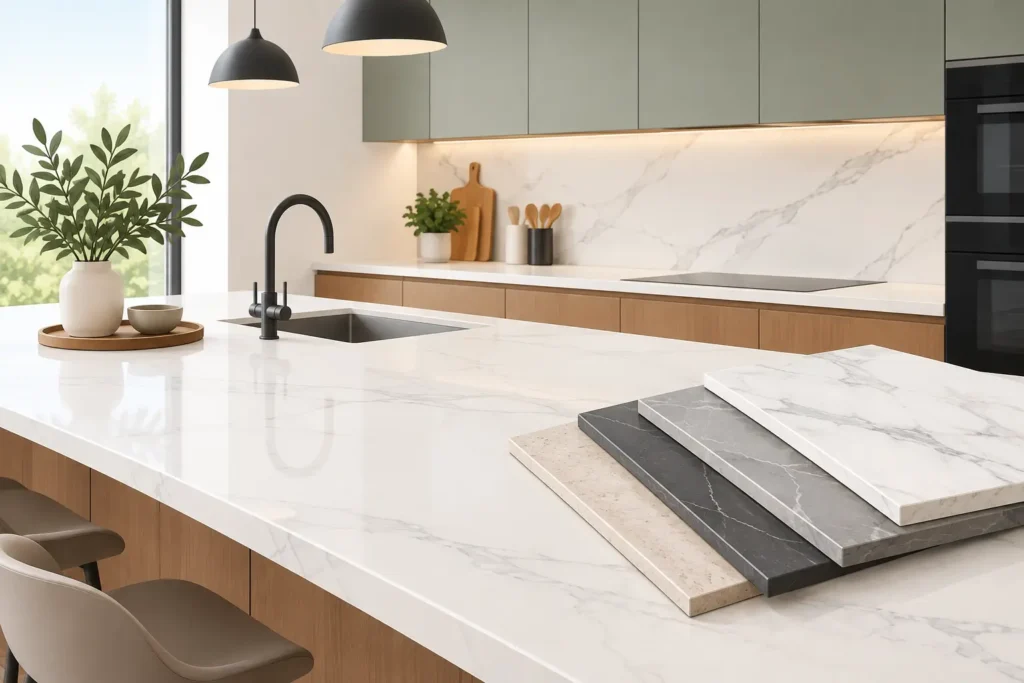
A worktop has to deal with far more than it gets credit for: hot pans, hurried breakfasts, splashes around the sink and the occasional dropped glass. Porcelain worktops are a strong choice for homeowners who want a refined, contemporary kitchen surface without signing up to intensive maintenance. They offer the look of natural stone, concrete or even timber-inspired finishes, while standing up well to the demands of family life.
The right choice is not simply about picking a colour from a sample. Slab thickness, finish, edge detail, kitchen layout and installation all affect how your finished worktop will look and perform. Seeing larger samples in person is particularly valuable with porcelain, as the veining, texture and light reflection can look very different from a small photograph.
Why porcelain worktops appeal to modern homes
Porcelain is made from natural minerals that are pressed and fired at very high temperatures. The resulting material is dense, non-porous and available in an impressive range of designs. You can choose a clean white marble effect for a classic kitchen, a deep charcoal surface for a more architectural look, or a warm limestone-style finish that softens contemporary cabinetry.
One of porcelain’s main advantages is its low-maintenance nature. Unlike some natural stones, it does not normally need sealing, and its non-porous surface is highly resistant to everyday staining. Tea, coffee, oil and acidic food spills can generally be wiped away with a damp cloth and mild detergent rather than requiring specialist products.
It is also highly resistant to heat, scratches and UV fading. That makes it a sensible option for bright kitchens, garden rooms and utility spaces where a worktop may receive plenty of sunlight. A pale porcelain surface can retain its clean appearance for years without the colour change that some materials experience.
That said, no worktop is completely indestructible. Porcelain is exceptionally hard but can chip if a heavy object strikes an exposed edge or corner. It is also wise to use a trivet for very hot cookware, particularly if the worktop has been exposed to cold temperatures. Careful fabrication and professional fitting are just as important as the quality of the slab itself.
Choosing the right porcelain worktops finish
A porcelain worktop should suit the way you use your kitchen as well as the style of your cabinets and flooring. A polished surface reflects more light and can make a compact kitchen feel brighter and more open. It works especially well with painted shaker kitchens, brass hardware and classic marble-effect designs.
A matt or textured finish has a quieter, more contemporary character. It is often more forgiving of fingerprints and water marks, making it a popular option for busy family kitchens. Textured stone-look designs can bring depth to a space without the upkeep associated with certain natural materials.
Colour needs some practical thought too. Very dark, highly polished worktops can show dust, crumbs and water spots more readily, while a heavily patterned slab may conceal everyday marks but can compete with decorative splashbacks or busy cabinetry. For a balanced look, match the amount of movement in the worktop to the rest of the room. If your doors have a strong grain or your flooring is richly detailed, a calmer porcelain design may be the better fit.
Thickness changes the overall look
Porcelain slabs are commonly used in slimmer profiles than granite or quartz, often around 12mm, although thicker looks can be created with mitred edges. A slim profile feels crisp and modern and is particularly effective in handleless kitchens or understated utility rooms.
A built-up edge gives the impression of a deeper, more substantial worktop without needing a solid thick slab throughout. This can be a good way to achieve a premium finish around an island or breakfast bar. The best option depends on your kitchen design, the support beneath the worktop and how visible the edges will be.
Ask to see edge samples alongside your cabinet door, flooring and wall finish. A small detail such as a squared edge, softened pencil edge or mitred return can make a considerable difference to the finished room.
Where porcelain works best
Kitchens are the obvious setting, but porcelain is equally well suited to utility rooms, boot rooms and laundry areas. These spaces often handle wet coats, muddy shoes, detergent bottles and pet bowls, so an easy-clean and stain-resistant surface can make daily life simpler.
For a kitchen island, porcelain offers plenty of design freedom. It can create a dramatic waterfall end panel, continue up the wall as a splashback or provide a sleek surface around a hob. Using the same material on the worktop and splashback can make a smaller room feel more considered, because there are fewer visual breaks.
Large-format porcelain can also be useful where you want fewer joins. However, the size and shape of your kitchen will determine the number and position of seams. An experienced fabricator will plan these carefully, often placing them where they are least noticeable and where the slab is best supported.
Practical points before you order
Porcelain worktops need specialist cutting, handling and installation. Although the finished material is hard-wearing, slabs can be more vulnerable during transport and fitting, especially around cut-outs for sinks and hobs. This is not a job for general DIY tools or an inexperienced installer.
Your kitchen units must be level, secure and correctly fitted before the final template is taken. Even a small level issue can affect the appearance of joins, upstands and wall gaps. If you are replacing worktops but retaining cabinets, it is worth checking the condition and strength of the existing units first.
Consider your sink choice early. An undermounted sink gives a clean, uninterrupted look and allows crumbs to be wiped directly into the bowl, but it requires precise fabrication. A Belfast or other heavy ceramic sink may need its own support within the base unit rather than relying on the worktop alone.
Induction hobs are a natural pairing with porcelain, particularly for a streamlined modern kitchen. For any hob installation, follow the appliance manufacturer’s clearance and ventilation requirements. Your installer and kitchen supplier should coordinate these details before fabrication begins, not on fitting day.
Caring for a porcelain surface
Daily care is refreshingly straightforward. Wipe the surface with warm water, a soft cloth and a mild, non-abrasive cleaner when needed. Drying it afterwards helps prevent water marks, particularly in hard-water areas.
Avoid harsh chemicals, abrasive scouring pads and cleaners intended for ovens or drains. These may not damage the porcelain itself immediately, but they can affect finishes, grout lines or nearby materials. Deal with spills promptly and do not use the worktop as a chopping board. Porcelain will usually resist knife scratches, but the blade will quickly become blunt.
Take care around vulnerable points such as outside corners, sink cut-outs and thin overhangs. Do not drop heavy pans onto the edge, and do not stand or sit on unsupported sections of an island or breakfast bar. These are sensible habits for any premium worktop, whether you choose porcelain, quartz, timber or stone.
Is porcelain the right choice for your project?
Porcelain is ideal if you want a low-maintenance surface with a high-end appearance and excellent everyday resistance. It is especially appealing for homeowners who like the veined look of marble but would prefer less ongoing care, or who want a contemporary stone effect that will not fade in a sunny room.
Budget remains an important consideration. The final price includes the chosen slab, templating, cut-outs, edge work, delivery and specialist installation, so it is worth comparing like for like rather than focusing only on a per-square-metre figure. A simple straight run will usually cost less than a large island with waterfall ends, multiple cut-outs and full-height porcelain splashbacks.
There are situations where another material may suit better. Timber brings warmth and can often be repaired or refinished, while laminate can offer a cost-effective solution for rental properties or tight renovation budgets. Porcelain earns its place where durability, easy care and a carefully finished look are the priorities.
Before making a final decision, bring a cabinet-door sample, flooring swatch and a photo or plan of your room to the showroom. At Oakley Wood Timber, helpful staff can help you compare surface finishes in person and choose a worktop that feels right for your home, not just for a showroom display. A well-chosen porcelain surface should make the everyday jobs feel easier while giving your kitchen a finish you will still be pleased to see each morning.