Oakley Wood Timber

Category: Advice guides

  • Engineered wood vs solid wood flooring

    Flooring & Door Advice / Flooring

    Flooring buying guide

    Engineered wood vs solid wood flooring

    Compare construction, appearance and installation before choosing a real wood floor.
    Oakley Wood Timber ·

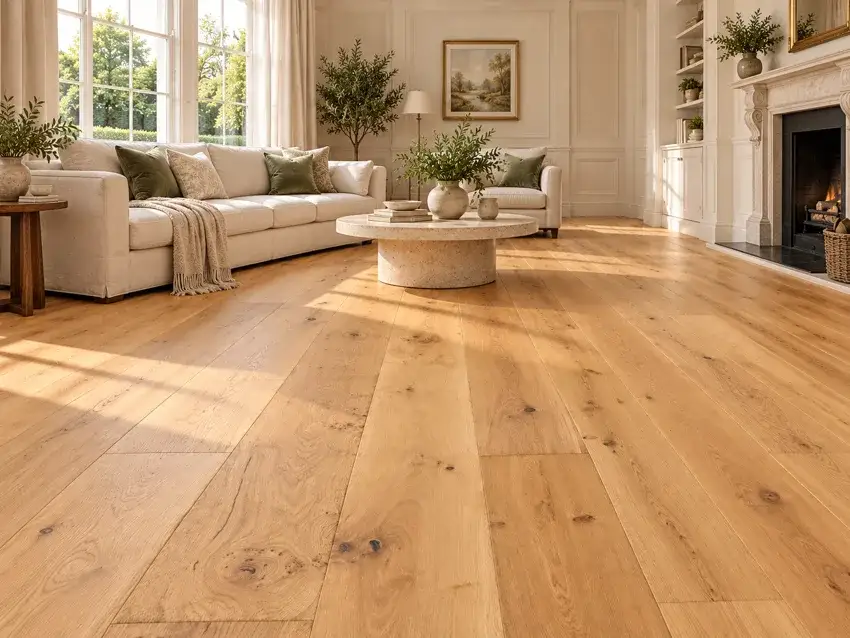
    Oak flooring in a furnished room

    What is the difference?

    Solid wood flooring is made from a single piece of timber. Engineered flooring has a real wood surface bonded to supporting layers. Both offer natural grain and character; engineered wood is not the same as laminate. The construction affects how a floor responds to changes in its surroundings and which installation methods are suitable.

    Compare the specifications, not just the name

    Look at the overall thickness, wear layer, board width, fitting system and finish. On an engineered board, the wear layer is the real wood surface. Its thickness matters if you may want to renovate the floor later. Whether a particular floor can be sanded depends on its condition, construction and manufacturer’s instructions; do not judge this by overall thickness alone.

    Think about the room and installation

    Ask your installer to check the subfloor, moisture conditions and proposed fitting method before you order. If you have underfloor heating, confirm compatibility for the exact product. Engineered construction is often worth considering for heated floors, but it does not make every board suitable for every system.

    Make a fair price comparison

    Compare prices including VAT, box coverage, delivery and the accessories required for installation. Measure the room and agree an allowance for cuts with your installer. A sample helps you assess colour and texture, while room photographs help you understand the overall effect. Natural wood varies from board to board.

  • Floating vs glued-down wood flooring

    Flooring & Door Advice / Flooring

    Flooring guide

    Floating vs glued-down wood flooring

    Compare installation methods and prepare the subfloor before making a decision.

    Oakley Wood Timber ·

    Oak flooring in a furnished room

    What is a floating floor?

    In a floating installation, the boards form a connected floor above the subfloor rather than being bonded directly to it. A compatible underlay is normally part of the specified system. Whether the joints lock or require adhesive depends on the floor. Floating should not be taken to mean that no preparation is necessary.

    What is a glued-down floor?

    A fully bonded installation uses a suitable flooring adhesive to attach the boards to the prepared subfloor. The adhesive must be compatible with the floor, substrate and any heating system. Your fitter should confirm the preparation and installation requirements before you purchase either the boards or fitting materials.

    An uneven subfloor still needs attention

    Neither method is a substitute for assessing the base. Ask the installer to check its strength, flatness, cleanliness and moisture condition. Do not use extra underlay or adhesive to improvise a remedy for an unsuitable subfloor. Preparation should be agreed before work starts so the fitting quotation covers the actual job.

    Choose for the exact floor and room

    Some products permit more than one fitting method, while others have specific requirements. Discuss the room layout, heating, thresholds and expansion provision with your installer. Herringbone layouts should be checked against their own instructions. Compare the complete installation cost, including preparation, materials and labour, rather than just the cost of underlay versus adhesive.

    Further reading: Kährs product-specific fitting information. Always use the installation and care instructions for your exact product.

  • Choosing flooring for underfloor heating

    Flooring & Door Advice / Flooring

    Flooring buying guide

    Choosing flooring for underfloor heating

    Check product compatibility, installation requirements and heat transfer before ordering.

    Oakley Wood Timber ·

    Oak flooring in a furnished room

    Start with your heating system

    Tell your installer whether you have a water-based or electric system and share the heating supplier’s instructions. Choose flooring that is approved for the specific installation. A general statement that a material works with underfloor heating is not enough to confirm that an individual product is suitable.

    Check the complete floor build-up

    The flooring, underlay and fitting method work together. Ask your installer to check the permitted combined thermal resistance and select a compatible underlay or adhesive. A thick or unsuitable underlay can restrict heat transfer. Check moisture-control requirements for your subfloor rather than assuming that every installation needs the same approach.

    Follow temperature and moisture limits

    The flooring manufacturer’s limits take priority. For example, Kährs specifies a maximum wood-floor surface temperature of 27°C for its systems; this is an example, not a specification for every floor we sell. Your installer should check the exact product requirements, test the subfloor and follow the heating commissioning procedure before fitting.

    Before you place your order

    Confirm product suitability, fitting method, underlay or adhesive, moisture testing and operating limits with your installer. Check any restrictions on rugs and furniture that could trap heat. Keep the instructions for both the floor and heating system, and use the recommended procedure when changing the heating settings.

    Further guidance: Kährs flooring FAQs. Requirements depend on the product selected.

  • How to measure for an internal door

    Flooring & Door Advice / Doors

    Doors buying guide

    How to measure for an internal door

    Record height, width and thickness, and check the frame before selecting a size.

    Oakley Wood Timber ·

    Oak internal door

    Check the frame first

    Inspect the existing frame for damage and check whether it is square. A new door will not solve a distorted or unsuitable frame. If you are changing the frame, arrange the door and frame specifications together. For a fire door, use the required compatible components and have the installation assessed by a competent installer.

    Record width, height and thickness

    Measure the opening where the door will sit at several points: width near the top, middle and bottom, and height at both sides. Note the smallest measurements and any differences. Also record the required door thickness and the frame rebate. Give these measurements to your installer so they can allow the correct fitting clearances.

    Compare with the product options

    Our door sizes are shown as height × width × thickness in millimetres. Do not assume that doors elsewhere in the house are the same size. Measure each opening individually and identify which door is intended for which room. Check the available standard sizes before deciding that you need a bespoke option.

    Confirm trimming and hardware before buying

    Doors have product-specific trimming limits. Do not order an oversized door on the assumption that it can be cut down substantially. Fire-door trimming and hardware must follow the relevant certification and instructions. Ask your installer to confirm the size, hinge arrangement, latch or lock, and finish requirements before placing your order.

  • Brushed, oiled and lacquered wood flooring

    Flooring & Door Advice / Flooring

    Flooring guide

    Brushed, oiled and lacquered wood flooring

    Separate surface texture from protective finish when choosing the look of your floor.

    Oakley Wood Timber ·

    Oak flooring in a furnished room

    Brushing describes texture

    A brushed surface highlights the timber’s grain and gives a different feel from a smoother surface. It is not itself a protective finish: a brushed floor may also be oiled or lacquered. Read the full product description so you know both the texture and the coating you are choosing.

    Compare oiled and lacquered appearances

    Oil and lacquer create different surface effects, and each is available in different colours and levels of sheen. Matt lacquer can create a subtle appearance, while satin finishes have a different visual effect. Compare physical samples rather than assuming that every oiled floor looks alike or that all lacquered floors are glossy.

    Check the maintenance commitment

    Ask which cleaner and maintenance products are approved for the specific finish. Some oiled floors require additional treatment at installation or later maintenance; the exact instructions matter. A lacquered floor still needs protection from grit, spills and furniture damage. Neither finish means the floor can be neglected or left wet.

    Choose with your room in mind

    Try samples beside your paint, cabinetry and furniture in daylight and evening lighting. Compare texture underfoot as well as colour. Unfinished boards need their specified finishing work, so include that in your plans and budget. Once you have chosen, keep the product details and care instructions so future maintenance matches the original surface.

    Further reading: Kährs surface-treatment guidance. Always use the installation and care instructions for your exact product.

  • Choosing door handles and accessories

    Flooring & Door Advice / Doors

    Doors buying guide

    Choosing door handles and accessories

    Match handles, hinges and locks to the way each room is used.

    Oakley Wood Timber ·

    Oak internal door

    Start with how the room is used

    A standard internal door may only need a latch, while a bathroom usually needs an appropriate privacy arrangement. A room requiring key locking needs a compatible lock and hardware. Decide the function for each room before choosing a handle style, so you can compare the correct pack options.

    Check what the pack includes

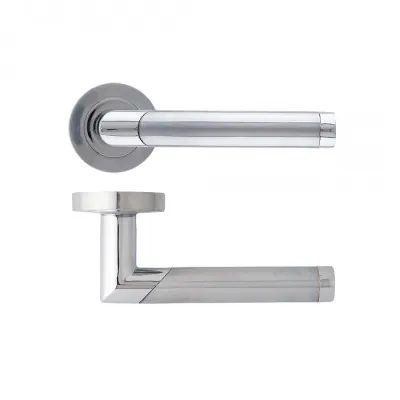
    Read the contents of the exact variant. Standard, bathroom, key-lock and fire-door packs can contain different components even when the handle design looks identical. Confirm whether hinges, a latch, a lock and any turn-and-release or escutcheons are included. Do not assume a pictured component is supplied with every option.

    Match the hardware to the door

    Check the permitted door thickness, hinge dimensions and latch or lock requirements. Fire doors require suitable hardware and installation in accordance with their certification; an attractive handle alone does not establish compliance. Ask your installer to confirm the complete arrangement before ordering, including any additional components needed.

    Coordinate the finish and quantity

    Consider how the handle finish will look beside hinges, locks and other fittings. Count the packs required for each door and room type, then review your basket against that list. On this website, door accessories are available when ordering a door. You can view the full accessory details before choosing a variant and quantity.

  • Choosing SPC flooring: a practical buying guide

    Flooring & Door Advice / SPC Flooring

    SPC flooring guide

    Choosing SPC flooring: a practical buying guide

    Compare construction, appearance and specifications before choosing rigid-core vinyl flooring.

    Oakley Wood Timber ·

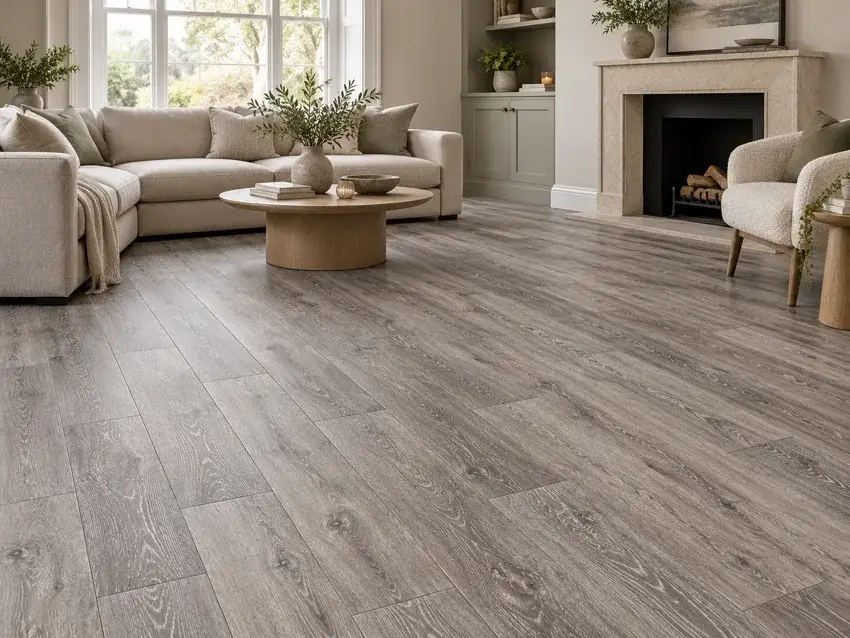
    Oak-effect SPC flooring room visualisation

    Understand what you are buying

    SPC is a type of rigid-core vinyl flooring. It offers decorative wood or stone effects rather than a real timber surface. Rigid vinyl products differ in their core construction, backing and locking system, so the words SPC or rigid core should be the beginning of your comparison, not the complete specification.

    Compare the surface and the complete board

    Check overall thickness separately from the wear-layer specification. Review the intended use, warranty conditions, dimensions and fitting system. A thicker board alone does not prove that a floor has a tougher surface. If a listing describes the top layer without a measured thickness, ask for the technical specification rather than assuming a value.

    Try the design in your room

    View samples beside your walls, furniture and adjoining floors. Compare texture and sheen as well as colour, and consider plank or herringbone layouts. Printed designs repeat, so ask your fitter to plan the arrangement according to the manufacturer’s instructions. Product photographs help with shortlisting but cannot reproduce every detail of a physical sample.

    Check the complete order

    Confirm room suitability, subfloor requirements and whether backing is already attached before buying accessories. Calculate boxes using the product’s stated coverage and an allowance for cuts agreed with your installer. Compare the final price including VAT, delivery, preparation and fitting. The current product page is the place to check prices and specifications for the floor you select.

    Further reading: Tarkett rigid-vinyl construction overview. Manufacturer examples describe their own ranges. Always follow the instructions for your exact product; these examples do not confirm that those ranges are sold on this website.

  • Wide-plank oak flooring: ideas from our installed projects

    Flooring & Door Advice / Inspiration

    Flooring inspiration

    Wide-plank oak flooring: ideas from our installed projects

    Compare two 260mm Windsor oak showcases and use them to refine your own flooring choices.

    Oakley Wood Timber ·

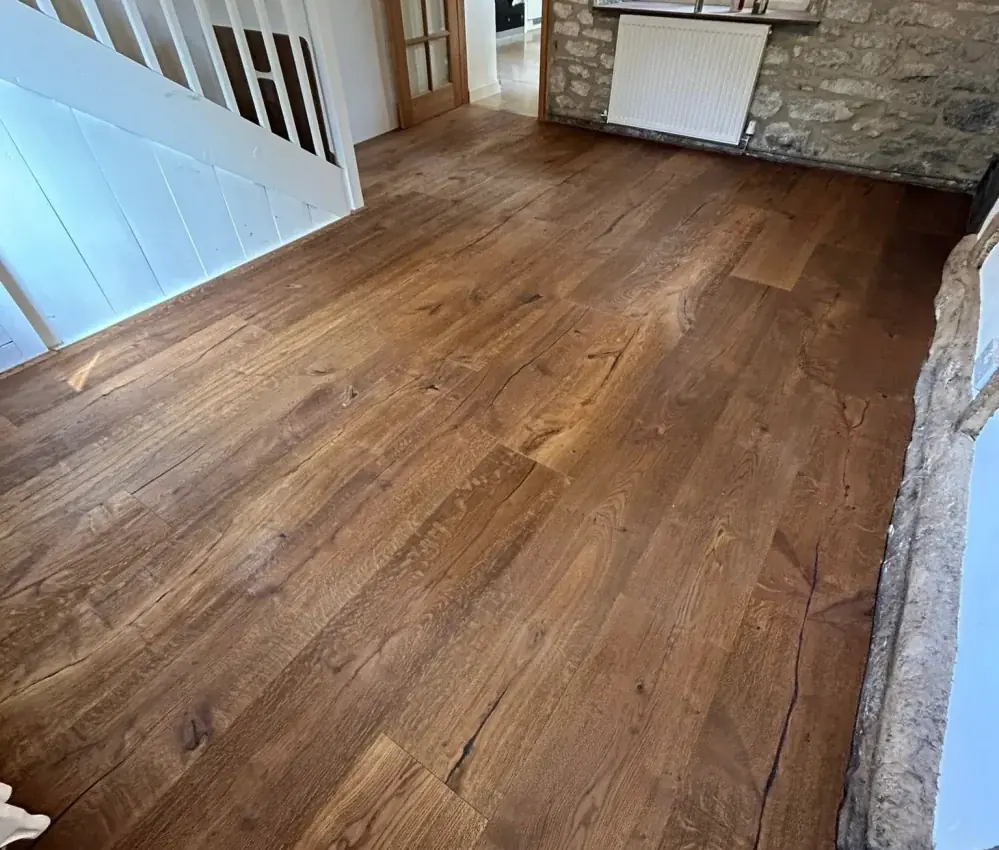
    Windsor Oak 3D Smoked Brushed Oiled 260mm wide installed floor

    Compare two wide-board examples

    Our “Our Work” collection includes Windsor Oak 3D Smoked Brushed Oiled 260mm wide and Windsor Oak Raw Invisible Brushed Lacquered 260mm wide. These showcases offer two different finishes to explore at the same stated board width. The photographs are available in our customer photo collection, allowing you to consider the overall appearance in finished spaces.

    Consider width alongside length

    Board width is only one part of the design. Length, the number of board joints, the grade and the finish also influence the overall effect. Use the project photographs as inspiration, then compare the actual specifications of products you are considering. Do not assume that every floor with a similar finish comes in the same dimensions.

    Use samples to narrow the choice

    Try samples alongside skirting, wall colours and furniture. As a design comparison, look at a lighter and a deeper-toned option in the same lighting. Photographs and screens are useful for shortlisting, but they cannot confirm the exact colour you will see in your home or show all the natural variation in the boards.

    Check suitability and availability

    Ask your installer to assess the subfloor, fitting method and any heating requirements for the exact floor. The Windsor showcases are inspiration from our wider project collection; the products currently available to order here are shown in our flooring categories. Contact us if you want help finding a similar look or confirming a particular product’s availability.

    Also view Windsor Oak Raw Invisible Brushed Lacquered 260mm wide.

    Inspired by our Windsor Oak 3D Smoked Brushed Oiled 260mm wide project showcase. Project photographs show an individual installation; natural timber and lighting can vary.

  • How to clean and care for SPC flooring

    Flooring & Door Advice / SPC Flooring

    SPC flooring guide

    How to clean and care for SPC flooring

    Protect your rigid-vinyl floor with suitable cleaning products and simple daily habits.

    Oakley Wood Timber ·

    Oak-effect SPC flooring room visualisation

    Remove loose dirt first

    Sweep or vacuum using a soft attachment suitable for the floor. Grit can mark a surface as people walk across it, so use suitable entrance mats and keep them clean. Check that mat backing and furniture pads are compatible with vinyl, and lift furniture instead of dragging it.

    Use the approved cleaner

    Follow the manufacturer’s care instructions and the cleaner’s dilution guidance. Remove loose debris before damp cleaning and wipe up spills promptly. Avoid experimenting with abrasive pads, strong solvents or treatments intended for real wood. If a stain persists, identify its cause and ask about a compatible spot-cleaning method.

    Do not assume steam is allowed

    Steam-cleaning advice differs between products. Some manufacturers allow it only under specific conditions; others restrict it. Use a steam mop only where the exact product’s maintenance instructions explicitly permit it, and follow every stated condition. A waterproof claim alone does not establish resistance to concentrated heat or steam.

    Repair vinyl as vinyl

    SPC’s decorative surface should not be treated like a sandable timber wear layer. For damage, ask about an approved repair product or board replacement suitable for the locking system. Keep spare boards if practical, along with the product code and care guide. Prevention and the correct cleaner are usually simpler than an improvised repair.

    Further reading: Quick-Step vinyl cleaning guidance. Manufacturer examples describe their own ranges. Always follow the instructions for your exact product; these examples do not confirm that those ranges are sold on this website.

  • How to clean and care for wood flooring

    Flooring & Door Advice / Flooring

    Flooring guide

    How to clean and care for wood flooring

    A practical routine for protecting your floor and choosing the right cleaning products.

    Oakley Wood Timber ·

    Oak flooring in a furnished room

    Start with dry cleaning

    Remove loose dust and grit regularly with a soft brush or a vacuum attachment suitable for wood flooring. Entrance mats help reduce the dirt brought into a room. Check furniture pads and replace worn ones, and lift furniture when moving it rather than dragging it across the boards.

    Use a damp mop, not a soaking one

    When damp cleaning is needed, use a well-wrung mop and a cleaner approved for the floor’s finish. Follow the cleaner’s dilution instructions. Avoid leaving puddles and wipe up spills promptly. More water or more detergent does not necessarily produce a cleaner floor, and an unsuitable product can affect its surface.

    Know whether your floor is oiled or lacquered

    Check your order details before buying a maintenance treatment. Oiled and lacquered finishes have different care requirements, and coloured finishes may require a matching product. Do not apply a generic polish, oil or refresher without checking compatibility. Keep the manufacturer’s care information with your purchase records.

    Deal with marks carefully

    Identify what caused a stain before trying to remove it. Test any approved treatment in an inconspicuous area and ask for advice if you are unsure. For persistent wear or damage, discuss repair options with a flooring professional rather than assuming the whole floor needs sanding. A sensible cleaning routine should be matched to how the room is used.

    Further reading: Kährs wood-floor care guidance. Always use the installation and care instructions for your exact product.