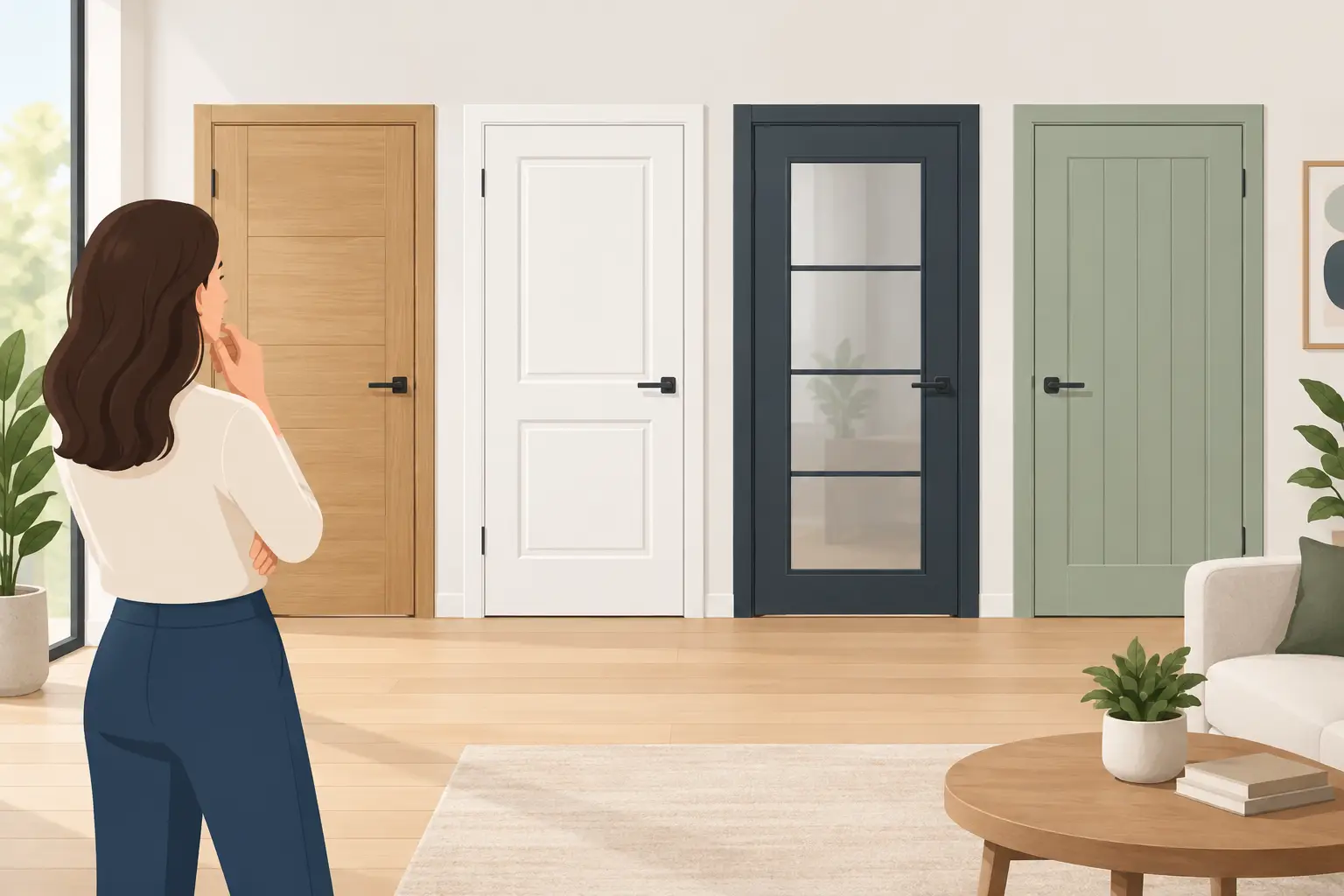
A new internal door can make an older room feel sharper, quieter and more considered – but only if it suits the opening, the way the room is used and the character of the house. Knowing how to choose internal doors means looking beyond a photograph or a finish sample. The right choice should work with your flooring, natural light, furniture and daily family life for years to come.
For many homeowners, doors are chosen late in a renovation. That can lead to compromises on style, size or budget. It is usually better to consider them alongside flooring, skirting and wall colours, particularly when several rooms are being updated at once.
Start with the style of your home
Internal doors do not all need to be identical in every detail, but they should feel like they belong together. A cohesive choice makes hallways and landings look calmer, especially where several doors are visible from one position.
Panelled doors are a natural fit for period homes, traditional family houses and properties with classic features such as dado rails or detailed skirting. Their raised or recessed panels add depth without demanding attention. Shaker doors offer a simpler version of this look and suit both older properties and modern extensions.
For cleaner, contemporary interiors, flush doors and doors with subtle grooves can give a more streamlined result. Oak veneer brings warmth and grain variation, while primed white doors are a flexible option if you want to choose your own paint colour. Black or dark-painted doors can look striking against pale walls, but they tend to suit rooms with good daylight and enough visual space around them.
The practical question is not simply whether you prefer traditional or modern. Look at the flooring and joinery already in place. A natural oak door may sit beautifully with engineered wood flooring, for example, while a crisp white door can provide a useful contrast to warm timber tones.
Decide where you need light and where you need privacy
Glazed internal doors are one of the most effective ways to improve a dark hallway, enclosed dining room or kitchen entrance. Clear glass allows daylight to travel between rooms and can make a ground floor feel more open without removing the separation that a door provides.
They are particularly useful between a hall and living room, or between a kitchen and dining area. If privacy is needed, consider frosted, reeded or obscure glass instead. These options still admit light but soften the view through the door.
Solid doors remain the better choice for bedrooms, bathrooms, studies and utility rooms. They create a clearer visual boundary and generally provide better sound reduction. A busy household often benefits from a solid door to a home office or lounge, even if glazed doors are used elsewhere.
Think about sightlines as well. A glazed door may brighten a hallway, but it can also reveal clutter in the next room. Stand in the hall, kitchen and main living space, then picture what will be visible when each door is open and closed.
Choose the right construction for the room
Door construction affects weight, feel, longevity and price. It is worth understanding the difference before making a decision based on appearance alone.
Hollow core doors are lightweight and often the most economical option. They can be appropriate for low-use cupboards or budget-conscious projects, but they generally feel less substantial and offer limited sound insulation.
Solid core doors have an engineered, dense internal construction beneath their face finish. They offer a more reassuring close, greater durability and improved acoustic performance. For family homes, bedrooms and rooms used every day, they are often a worthwhile step up.
Solid oak doors are made from real timber throughout and bring genuine weight, natural character and long-term appeal. They can be an excellent choice in the right property, particularly when paired with quality timber flooring and traditional joinery. As with any natural wood product, grain and colour will vary from door to door. That variation is part of their appeal, but it is worth viewing several examples before committing.
Engineered or veneered oak doors are another strong option. A real oak veneer is applied over a stable core, giving the look of timber with a consistent finish and often a more accessible price. The best choice depends on your budget, the level of use and whether you value natural variation or a more uniform appearance.
Get the size and handing right before ordering
An attractive door that does not fit properly quickly becomes an expensive problem. Measure every opening individually. In older homes, openings can differ by a few millimetres even when they appear the same, and walls or floors may not be perfectly square.
You will need to decide whether you are replacing the door leaf only or fitting a complete door set with a new frame and linings. Reusing an existing frame can keep costs down, but it relies on the frame being sound, straight and suitable for the new door thickness.
Door swing matters more than many people expect. Consider which way each door opens, whether it blocks a light switch, clashes with another door or takes up useful floor space. In compact en-suites, utility rooms and cupboards, a sliding or folding arrangement may be worth considering. These can save space, although they do not always provide the same acoustic seal as a conventional hinged door.
Allow for flooring height too. New engineered wood, laminate or LVT may change floor levels and affect the clearance beneath the door. Planning doors and flooring together helps avoid excessive trimming later.
Do not overlook handles, hinges and finishing
Door furniture can change the final look considerably. Polished chrome feels clean and familiar, satin or brushed nickel is understated, while black hardware gives a sharper contemporary contrast. In a traditional home, aged brass or antique-style handles may suit the setting better.
Try to keep handles, hinges and latches consistent across the areas of the home that can be seen together. You do not need to match every fitting in the property, but a considered finish creates a more complete result.
Oak and other timber doors may need oiling, varnishing, staining or painting, depending on the product and look you want. Primed doors still need a top coat. Factory-finished doors can save time on site and offer a reliable finish, although they give less freedom over colour. Always check the manufacturer’s finishing requirements before installation, as using the wrong product can affect the appearance and any guarantee.
Set a realistic budget for the full job
The price of the door is only part of the project. Budget for handles, hinges, latches, frames or linings where needed, architraves, finishing materials and fitting. Fire doors, glazed doors and non-standard sizes can also add to the cost.
If the budget is tight, it is often better to choose a good-quality, simple door throughout than to mix several unrelated styles. You can still create interest with glazing in key locations, such as a hallway or dining room, while keeping solid matching doors in bedrooms and bathrooms.
For a larger refurbishment, seeing the doors beside flooring samples is a sensible way to avoid surprises. The tone of oak can shift noticeably between cool daylight, warm artificial light and a showroom display. Taking time to compare finishes in person can make the decision much easier.
See the doors before you decide
Photographs are useful for narrowing down a style, but they cannot show the weight of a door, the texture of a veneer, the clarity of glass or the difference between similar oak shades. Visiting a specialist showroom gives you the chance to open and close doors, compare styles side by side and discuss practical details before placing an order.
At Oakley Wood Timber, homeowners can view a huge selection alongside premium wood flooring and talk through the options with helpful staff who understand how the elements of a renovation need to work together. With more than 30 years of experience, the team can help make a substantial purchase feel straightforward, whether you are replacing one damaged door or planning a whole-house refurbishment.
Take a few photographs of your rooms, note your opening sizes and bring along a flooring or paint sample if you have one. A door is a daily-use feature, not an afterthought, and the right one will quietly improve every room it connects.