How to Compare Flooring Samples Properly
21 November 2026
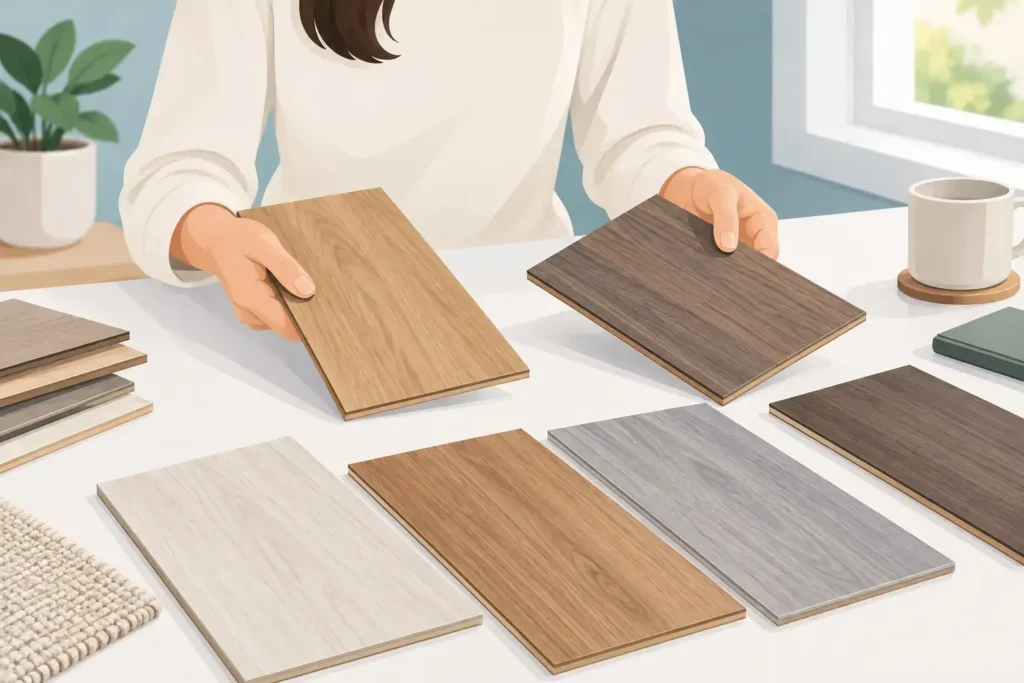
A floor can look completely different on a showroom rack, in a photograph and in your own hallway at four o’clock on a rainy afternoon. That is why knowing how to compare flooring samples properly is one of the most useful parts of planning a new floor. A sample is not just a colour swatch. It is your chance to test whether a floor will suit the light, use and character of the room before you commit.
For a busy family kitchen, a calm bedroom or a full renovation project, the right choice comes from seeing and handling samples in realistic conditions. Take your time with them. A premium wood floor, laminate or LVT should look good on day one, but it also needs to make practical sense for the years ahead.
Start with the room, not the sample
It is tempting to begin with a favourite shade - pale oak, warm honey, smoked brown or a contemporary grey. Colour matters, but the room should lead the decision. Consider how much natural light it receives, whether it is a high-traffic area, and what sits beside the floor: cabinetry, skirting boards, doors, worktops and furniture.
A pale floor can make a smaller or darker room feel more open, while mid-tone and darker boards often bring warmth and definition to larger spaces. Neither is automatically better. Very pale finishes can show dark scuffs, while very dark floors may reveal dust more readily. The best choice is the one that works with the way your household actually lives.
Bring a few reference items together if you can. A paint card, cupboard-door sample, curtain fabric or worktop offcut can reveal clashes that are easy to miss when each finish is viewed on its own. If you are replacing internal doors as part of the same project, compare the floor against the door finish rather than trying to match timber tones exactly. Complementary tones usually look more natural than an almost-match.
How to compare flooring samples in the right light
Showroom lighting is designed to help you see a product clearly, but it cannot reproduce every room in your home. Once you have narrowed your choice, place larger samples where the flooring will be fitted and look at them several times during the day.
Morning daylight tends to be cooler, direct afternoon sun can bring out golden or red undertones, and evening lamp light often makes wood finishes appear warmer. A grey oak that feels clean and contemporary in bright daylight may look noticeably beige under warm bulbs. Likewise, a natural oak can appear lighter beside a south-facing window than it will in a shaded lounge.
Lay samples flat rather than holding them upright. Flooring is normally seen underfoot, where light falls across it at a low angle and picks up texture, knots and sheen. Turn each sample around too. Plank direction can change the impression of both the room and the colour, especially in narrow hallways.
Avoid making a decision from a small piece alone. Timber is naturally varied, and a single board cannot show every knot, grain pattern or shade within a full floor. Ask to see a wider display panel or an installed floor where possible, particularly with engineered wood and solid wood. This gives a much more honest view of the overall effect.
Look beyond colour: texture, grade and finish
Two oak floors with a similar name can feel entirely different underfoot. The surface texture and finish affect the appearance, cleaning routine and character of the finished room.
Brushed wood has a textured surface that highlights the natural grain, giving it a relaxed, tactile look. Smooth boards are more refined and can suit a cleaner, more contemporary interior. Hand-scraped or distressed finishes add visible character, which can be ideal for period homes or spaces where a more lived-in appearance is wanted.
Also look at the timber grade. Select or prime grades tend to be more even in colour and grain, with fewer knots. Rustic grades embrace knots, mineral streaks and variation. A rustic oak floor can be very forgiving in an active family home because its natural detail disguises the occasional mark, whereas a cleaner grade gives a more uniform appearance but may show dents or scratches more clearly.
Check the sheen as well. Matt and low-sheen finishes are popular because they feel understated and generally hide everyday dust better than a high-gloss surface. A lacquered finish offers a protective top layer and straightforward care, while oiled wood has a softer, more natural look and can be repaired locally if marked. Oiled floors do require regular maintenance, so choose them because you like the finish and are happy with the care involved, not simply because they look good on a small sample.
Compare the construction as well as the appearance
A beautiful sample is only half the decision. The material needs to suit the room and subfloor.
Engineered wood flooring offers a real timber wear layer over a stable layered base. It gives the warmth and individuality of wood while being well suited to most homes, including many installations over underfloor heating when the product and fitting method are approved. Solid wood is a traditional choice with substantial character, but it is more sensitive to changes in temperature and humidity. It is usually better reserved for appropriate dry rooms and should be specified carefully.
Luxury laminate can provide a highly convincing timber look at an affordable price. It is hard-wearing and practical, making it a strong option for family rooms, hallways and rental properties. LVT is similarly versatile, with a softer feel underfoot than laminate and excellent practicality for kitchens, utility rooms and other areas where spills are more likely.
When comparing samples, ask what each product is designed to handle. Consider water resistance, scratch resistance, thickness, fitting system and suitability for underfloor heating. Do not assume that all click floors perform in the same way, or that a water-resistant product is suitable for every wet area. The product specification and the condition of the subfloor both matter.
Test samples for daily life
Your new floor will live with children, pets, chairs, shoes, shopping bags and the occasional dropped pan. Use the sample to think through these everyday details.
Hold it against the kitchen unit kickboards. Place it next to a rug. See how it looks beside the sofa and in the doorway to the adjoining room. If you have a dog, look closely at surface texture and finish rather than relying on a claim that any floor is completely scratch-proof. If you have young children, a floor with natural variation and a matt finish may be more relaxed to live with than a very smooth, uniform surface.
Thickness is practical too. A thicker board or plank can affect door clearances, transitions into neighbouring rooms and the height of existing skirting. This is particularly relevant in renovations where you are keeping some original features. Take a few measurements before falling in love with a product, and factor in underlay or levelling work where required.
Compare samples as part of the whole house
A floor does not need to be identical in every room, but it should feel considered as you move through the property. Start with the main living areas and decide whether you want one continuous look or subtle changes between zones.
Using the same or closely related floor through a hallway, lounge and dining space can make a home feel larger and more settled. A change to LVT in a utility or kitchen can still work well if the tone connects with the wood or laminate in adjoining rooms. Compare samples side by side at doorways, not only within each room. The transition is where an awkward contrast is most obvious.
Think about plank width and length as well as colour. Wider boards can make an open-plan room feel spacious and premium, while narrower boards may suit smaller rooms or traditional properties. In a compact space, a busy pattern or very short plank can make the floor feel more fragmented.
Use the showroom to make a confident final choice
Online images are useful for initial ideas, but they cannot tell you how a brushed oak feels, how a bevel catches the light or how a particular LVT texture looks across a larger area. Seeing a huge selection in person makes comparisons faster and more reliable, especially when several finishes appear similar on screen.
At Oakley Wood Timber, the showroom gives homeowners the chance to view more than 600 products, compare real boards and planks, and talk through the practical differences with helpful staff. With more than 30 years of experience, the team can help you narrow down options based on your room, budget and preferred look, rather than leaving you to guess from a small image.
Bring photographs and measurements with you, along with any paint, tile or worktop samples you already have. It is often the simplest way to move from several attractive possibilities to one floor that feels right for your home.
The sample that wins is rarely the one that looks best under perfect lighting for ten seconds. It is the one that still looks right beside your décor, suits the demands of the room and feels like a floor you will be pleased to come home to every day.