Kitchen Worktop Renovation That Truly Lasts
3 November 2026
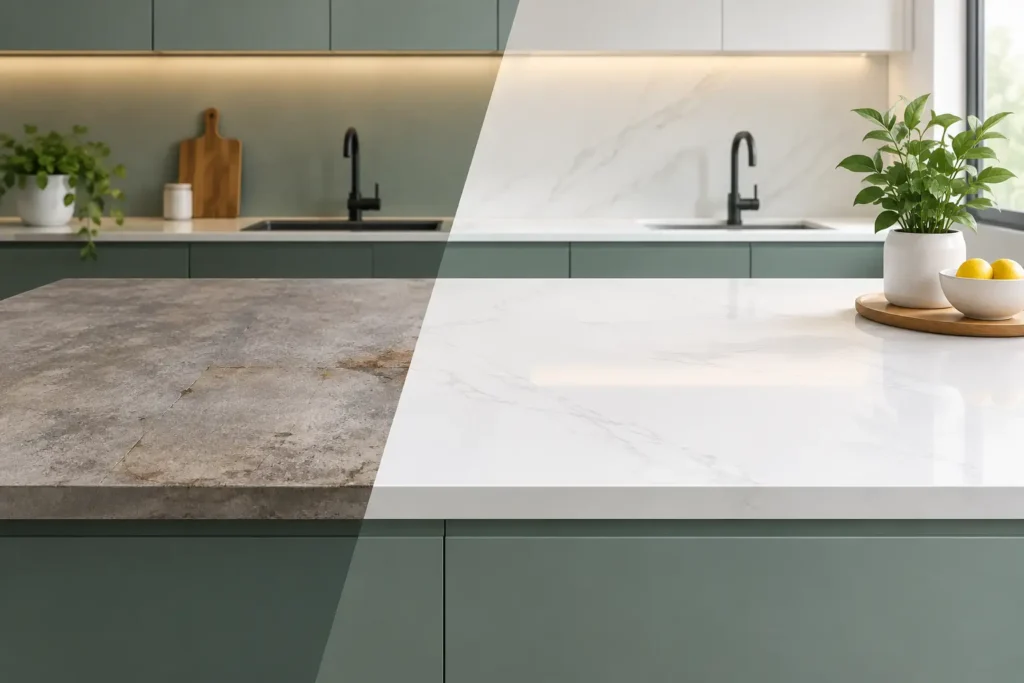
A tired worktop can make an otherwise sound kitchen feel dated, even when the cabinets still have years of life left in them. A kitchen worktop renovation is therefore one of the most effective ways to refresh the room without committing to a complete refit. The right surface can bring warmth to painted units, sharpen a contemporary scheme or make a hardworking family kitchen easier to live with.
The best choice is not always the most expensive one. It is the worktop that suits how you cook, clean and use the room every day, while sitting comfortably within the wider renovation budget. Seeing full-size samples in person is particularly useful here: grain, texture and edge details are difficult to judge from a small online image.
Start Your Kitchen Worktop Renovation With the Room
Before choosing a material, look closely at what is staying. Cabinet condition, wall finishes, splashbacks, sink position and appliances all affect the scope of the job. If the units are level, structurally sound and in a style you still like, replacing the worktops can provide a substantial change for far less than fitting a new kitchen.
Take accurate measurements of every run, including breakfast bars, peninsulas and utility areas. Allow for upstands, end panels and any overhang needed for seating. It is also worth deciding early whether the sink and hob will remain in their current positions. Moving either can add plumbing, electrical and fitting costs that turn a straightforward update into a larger project.
A worktop should also relate to the rest of the house. In an open-plan kitchen-diner, for example, a warm timber surface can echo engineered wood flooring and make the two spaces feel considered rather than separate. In a compact kitchen with limited daylight, a lighter laminate or pale wood finish can prevent the room from feeling heavy.
Choosing the Right Worktop Material
There is no single best worktop material. The practical answer depends on your budget, the look you want and how much maintenance you are prepared to take on.
Solid wood for natural character
Solid wood worktops have a depth and warmth that manufactured surfaces cannot fully reproduce. Oak is a popular choice for its distinctive grain and dependable appearance, while other timbers can offer a calmer or more dramatic finish. Each piece has its own variation, which is exactly why many homeowners choose it.
Wood needs care, particularly around sink cut-outs, dishwashers and joints. Regular oiling helps protect the surface and keeps the colour rich. Spills should be wiped away rather than left to sit, and very hot pans should never go directly onto the timber. For homeowners who appreciate natural materials and do not mind a little routine maintenance, wood develops a pleasing lived-in character over time.
Laminate for value and easy upkeep
Modern laminate worktops offer a huge selection of finishes, including convincing timber, stone and concrete effects. They are a sensible option when a kitchen needs a clear visual improvement at an affordable price, or when a landlord is updating a rental property with durability and easy cleaning in mind.
Laminate is generally straightforward to look after, but the edges and joints need careful fitting. Water getting into an unprotected joint can cause swelling, so a professional, tidy installation matters. Choose a quality finish and a realistic texture, and laminate can look far more refined than many people expect.
Consider how the surface will be used
A busy family kitchen puts different demands on a worktop from a lightly used utility room. If children regularly do homework at the island, a forgiving laminate may be the practical choice. If cooking and entertaining are central to the home, solid wood can make the island feel like a proper piece of furniture.
Think about cleaning habits too. A pale surface can brighten the room but may show strongly coloured spills more readily. Darker finishes can feel smart and grounded, although crumbs, dust and water marks may be more visible. There is always a balance between appearance and day-to-day reality.
Details That Make a Worktop Look Finished
The material is only part of the decision. Small details often determine whether a kitchen worktop renovation looks carefully planned or merely replaced.
An upstand can create a neat transition between worktop and wall, especially where a full splashback is not being installed. It is useful for protecting painted walls from splashes and can make the worktop feel more substantial. Matching window sills are another simple way to carry a material through the room.
Edge profiles deserve attention as well. A square edge suits clean, modern cabinetry, while a gently rounded profile can soften a more traditional kitchen. With timber worktops, the edge treatment can bring out the thickness and natural character of the board. Consider handles, taps and lighting at the same time: a warm oak worktop might sit beautifully with brushed brass or black fittings, while a pale laminate can complement chrome or stainless steel.
Do not overlook the sink cut-out. Undermounted sinks, inset sinks and Belfast-style designs each need different treatment, and timber should be sealed carefully around any area exposed to regular moisture. A drainer groove can be practical, but it also needs to be positioned to suit the way the sink is used.
Plan for Fitting, Not Just the Board
A good worktop can be undermined by poor preparation. Cabinets must be level and properly secured before a new surface goes on. Walls are rarely perfectly straight in older Buckinghamshire homes, so templating and scribing may be needed to achieve a close, tidy fit.
Ask who will measure, cut and fit the worktop, and clarify what is included. Mitred corners, hob and sink cut-outs, end caps, joining bolts and finishing oil can all affect the final cost. If you are using several trades, arrange the sequence carefully. Worktops are normally fitted after cabinets are in place but before final plumbing and appliance connections are completed.
It is sensible to order a little extra material where the layout allows, particularly with natural wood. This gives the fitter room to select the most attractive sections of grain for visible areas and to allow for cuts. Trying to save money by ordering to the exact millimetre can create avoidable problems if a wall is out of square or a board is damaged during installation.
Avoid the Common Renovation Shortcuts
The most frequent mistake is choosing purely by appearance. A striking worktop may not suit the cleaning routine, colour palette or wear level of the kitchen. The second is treating installation as an afterthought. Worktops are highly visible surfaces, and poorly sealed joints, uneven overhangs or rough cut-outs will show every day.
Another common issue is forgetting that a new worktop can make old elements look tired. You may not need to replace every cabinet, but refreshing handles, repainting walls or changing a dated splashback can help the renovation feel intentional. These small decisions are often more cost-effective than extending the project into a complete kitchen replacement.
For those comparing real samples, Oakley Wood Timber offers a showroom-led way to assess colour, grain and finish alongside knowledgeable, practical advice. It is easier to make a confident choice when you can view a broad range of worktops properly, rather than trying to judge a surface from a screen.
Give the New Surface the Care It Deserves
Once fitted, a few simple habits will protect the investment. Use chopping boards rather than cutting directly on the worktop, wipe spills promptly and use trivets for hot cookware. Timber should be re-oiled in line with its finish and level of use, especially around sinks and draining areas. Laminate benefits from non-abrasive cleaning and dry joints.
A well-chosen worktop does more than cover cabinets. It changes the feel of the kitchen at the point where meals are prepared, conversations happen and daily life gathers. Take samples home, view them in morning and evening light, and choose the finish that will still feel right after the renovation dust has settled.