LVT vs Laminate: Which Floor Suits Your Home?
28 October 2026
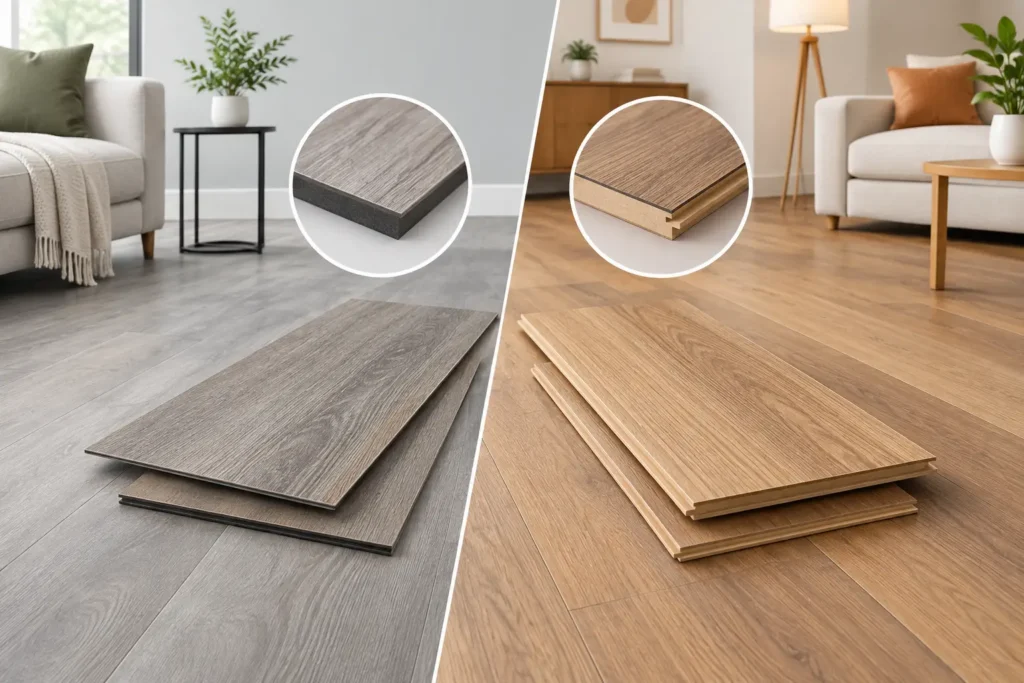
A new floor has to cope with real life, not just look good on a small sample board. For many homeowners, the choice comes down to LVT vs laminate: two practical, convincing alternatives to natural wood that offer a huge choice of colours, plank sizes and finishes. They can look remarkably similar at first glance, but they feel different underfoot, cope with moisture differently and suit different rooms.
The right choice depends on how your household uses the space. A busy kitchen, a family hallway and a quiet upstairs bedroom place very different demands on a floor. Looking at full-size boards, rather than deciding from a screen, makes those differences much easier to judge.
LVT vs laminate flooring: the key difference
LVT stands for luxury vinyl tile. Despite the name, it is available in wood-effect planks as well as stone and tile designs. It is made from layers of vinyl, usually with a printed design and a hard protective wear layer on top. LVT may be fitted as a glue-down floor or as a click-together floating floor, depending on the range.
Laminate flooring is built differently. It generally has a dense fibreboard core, a photographic decorative layer and a tough clear surface. Most modern laminate boards click together and sit as a floating floor over a suitable underlay.
That construction shapes the decision. LVT is softer, quieter and better suited to spaces where splashes, damp shoes and everyday spills are expected. Laminate often provides a firmer feel, a particularly crisp wood-board appearance and excellent value for larger dry areas. Both can be attractive, durable choices when the product and fitting method match the room.
Appearance: both offer convincing wood effects
There is no simple winner on appearance. Quality laminate can recreate the texture and grain variation of oak very effectively, with synchronised embossed finishes that follow the printed grain. Long, wide boards can give a living room or bedroom a smart, traditional timber-floor look without the maintenance of real wood.
LVT has moved well beyond the flat vinyl appearance people may remember. Premium ranges include natural-looking knots, tonal variation and textured surfaces, while herringbone and parquet-style formats can create a more tailored finish. LVT also offers a wider choice of stone and tile effects, which can work especially well in kitchens, utility rooms and bathrooms.
The detail matters more than the category. Look at the repeat pattern across several boards, the bevel around each edge and the surface texture. A pale plank that feels right in a bright showroom can look quite different beside your cabinetry, paint colours and natural light at home. Taking time to compare samples against those finishes is worthwhile.
Water resistance and room suitability
This is often the deciding factor. LVT is highly water resistant, which makes it a strong choice for kitchens, utility rooms, entrance halls and bathrooms. Spilt drinks, wet coats and muddy paw prints are far less concerning when the floor has been correctly installed and maintained. Glue-down LVT can be particularly useful where a low-profile finish is required.
Laminate has improved considerably, and many ranges are marketed as water resistant or suitable for kitchens. That does not mean every laminate floor should be treated like a waterproof surface. Standing water can find its way into joints or around edges, potentially causing a fibreboard core to swell. A spill wiped up promptly is one thing; a leaking washing machine or regularly wet bathroom floor is another.
For a downstairs cloakroom, bathroom or utility, LVT is usually the safer recommendation. For a lounge, dining room, bedroom or home office, both materials can be excellent. In a kitchen, the answer depends on your preference, the quality of the laminate and how much water the room genuinely sees.
Comfort, warmth and noise underfoot
LVT tends to feel warmer and more forgiving underfoot than laminate. That is welcome in a kitchen where you may spend time standing to cook, or in a family home where toys, pets and footsteps create constant activity. It also tends to reduce the sharper sound of heels and dropped items.
Laminate feels harder because of its denser core, although the right underlay makes a noticeable difference to comfort and sound. A quality acoustic underlay is worth considering for upstairs rooms, flats and open-plan spaces. It should always be compatible with the flooring selected, rather than simply being the thickest option available.
Both LVT and laminate can work with underfloor heating, but product limits must be checked before installation. Temperature restrictions, underlay requirements and the type of heating system vary by manufacturer. This is one area where a quick conversation before ordering can prevent an expensive mistake.
Durability: think about the type of wear
Laminate is known for its tough top surface and can be a very practical option for everyday family life. It resists many scratches and scuffs well, particularly when you choose a quality domestic-grade product. It is a sensible choice for busy living areas where you want the appearance of wood at affordable prices.
LVT is also hard-wearing, but its performance is linked to the thickness of its wear layer and the installation quality. It copes well with daily traffic and is less likely to chip than a rigid board. However, heavy furniture dragged across it, grit under chair legs and very sharp objects can still mark the surface.
Neither floor is indestructible. Use entrance mats to trap grit, fit felt pads beneath furniture and lift rather than drag heavy items. If strong sunlight falls through large patio doors, ask about the floor's suitability for that exposure. Fade resistance and expansion requirements should be considered before fitting, particularly in south-facing rooms.
Installation and subfloor preparation
Laminate is often quicker to install because it clicks together over an underlay. The existing subfloor still needs to be dry, level and sound, but minor variations can sometimes be less visible beneath a floating system. Expansion gaps around the perimeter are essential, so skirting, trims and door thresholds need planning for a neat finish.
LVT is less forgiving of an uneven floor. Any dips, ridges or imperfections can show through, especially with glue-down products. A smooth, properly prepared subfloor is fundamental to a professional result. This may involve smoothing compound or plywood preparation, which should be included when comparing fitting costs.
Click LVT can feel like the middle ground, with a simpler fitting system and a more substantial board. Yet it still needs a flat base and the correct underlay if one is specified. Do not choose solely on the cost per square metre. Include preparation, trims, underlay, uplift of old flooring and fitting in the overall budget.
Cost: where each option offers value
Laminate generally has the lower starting price, which makes it appealing when renovating several rooms or improving a rental property. There are excellent luxury laminate options too, so a lower price does not automatically mean a less convincing finish. It simply gives you more scope to achieve a polished look within a tighter budget.
LVT often costs more initially, especially once subfloor preparation and professional installation are allowed for. In rooms exposed to moisture and heavy daily use, that additional outlay can be worthwhile. Its comfort, water resistance and design flexibility may mean it remains the better long-term value for the space.
A practical way to decide is to put budget aside for a moment and consider the room first. Then choose the best product within that category. Buying a beautiful laminate for a bathroom, or selecting LVT without allowing for the necessary floor preparation, can create problems that a slightly different choice would have avoided.
Which should you choose for each room?
For bathrooms, utility rooms and frequently used kitchens, LVT is usually the more dependable choice. Its water resistance and softer feel suit spaces where spills and wet footwear are routine.
For lounges, bedrooms, dining rooms and studies, laminate can offer excellent value, a convincing timber appearance and a tough surface. LVT remains a good option if you prefer a quieter, warmer feel or want the same finish to continue through several downstairs spaces.
Hallways sit between the two. LVT handles wet shoes well, while a high-quality laminate can work where a good door mat, careful cleaning and prompt attention to moisture are realistic. Families with dogs, young children or an active outdoor lifestyle often appreciate the reassurance of LVT here.
See the difference before you decide
Photographs cannot show how a floor feels underfoot, how the texture catches the light or how different plank widths change a room. At Oakley Wood Timber, homeowners can compare a huge selection of LVT and luxury laminate in person, with helpful staff on hand to talk through room use, style and budget.
Bring a cupboard door, paint sample or photograph of your space if you can. Seeing flooring beside the colours and finishes already in your home is often the moment the right choice becomes clear.