Oak Versus Quartz Worktops: Which Suits You?
26 October 2026
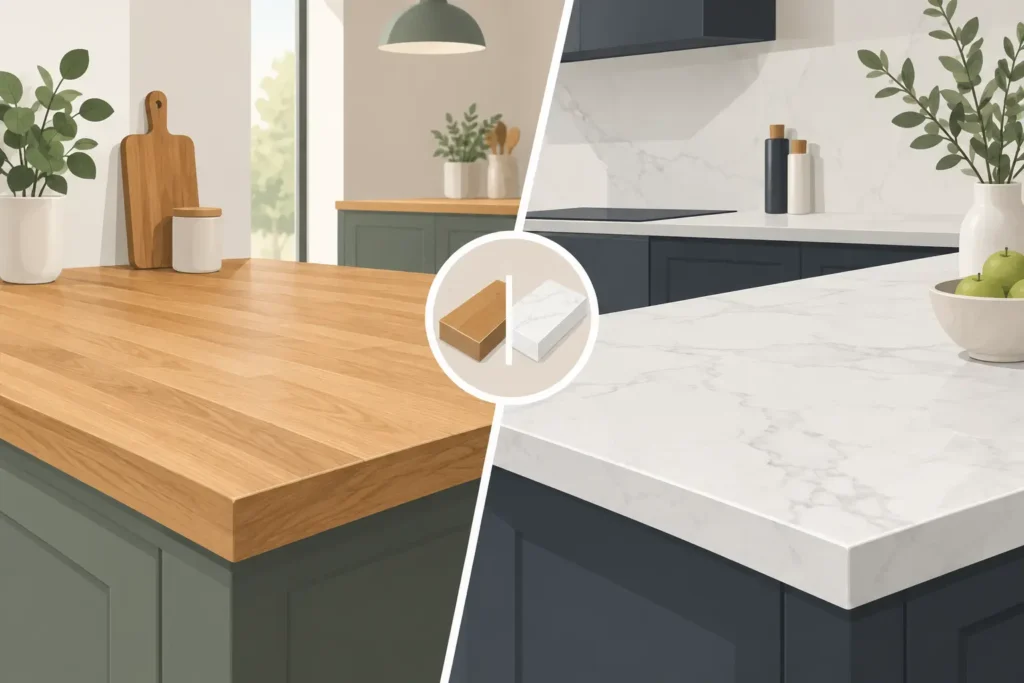
A worktop has to cope with far more than looking good under showroom lighting. It is where hot pans land, glasses spill, children do homework and meals are prepared every day. When comparing oak versus quartz worktops, the right choice comes down to how you use your kitchen, the character you want from the room and how much routine care you are happy to give the surface.
Oak brings natural warmth, grain and individuality. Quartz offers a clean, highly durable finish with a huge choice of colours and patterns. Neither is automatically better. A busy family kitchen may benefit from the easy-care nature of quartz, while a period property or character-led renovation can be transformed by the honest appeal of real oak.
Oak versus quartz worktops at a glance
Oak is a natural hardwood worktop. Every stave has its own grain, tone and small variations, so no two installations look exactly alike. It can feel traditional, contemporary or somewhere in between, depending on the cabinet colour, edge profile and finish chosen. A pale oak top can soften a modern shaker kitchen, while a richer oiled oak works beautifully with painted units, Belfast sinks and timber flooring.
Quartz is an engineered stone surface, made from natural quartz combined with resin and pigments. It is supplied in a broad range of consistent finishes, from bright white and soft concrete effects to convincing marble-inspired designs. For homeowners who want a crisp, polished kitchen with little day-to-day fuss, quartz has obvious appeal.
The most useful question is not whether timber or stone is more fashionable. Ask what will make your kitchen easier to live with five years from now.
Appearance: natural character or uniform finish?
Oak has a depth that manufactured surfaces cannot fully copy. The grain catches the light differently throughout the day, and a well-finished timber worktop gains character as the room is used. Knots, mineral streaks and tonal movement are part of the appeal rather than faults. If you have chosen wood flooring, internal oak doors or natural textures elsewhere in the home, an oak worktop can bring those elements together without making the room feel over-designed.
That individuality also means you need to view the material with realistic expectations. A sample is a guide, not a promise that every section of the finished top will look identical. This is one reason seeing full boards and installed examples in person is so useful.
Quartz is the stronger option if you prefer visual consistency. A pale quartz worktop can make a compact kitchen feel lighter, while darker shades create a sharp contrast against white or light-coloured cabinetry. Marble-effect quartz gives the look of veining without the porosity and specialist care associated with natural marble.
There is still plenty of variation in quartz designs, especially veined styles, but it is controlled. That makes it easier to plan a precise look across a larger kitchen, island and upstand.
Daily durability and resistance to marks
Quartz is exceptionally hard-wearing for normal kitchen life. It resists staining well, does not need regular oiling and is straightforward to clean with a soft cloth, warm water and mild detergent. Red wine, cooking oil and everyday splashes are less likely to cause lasting problems when they are wiped up promptly.
It is not indestructible, however. Quartz can chip at an exposed edge if it receives a heavy impact, and very hot pans should not be placed directly on it. Thermal shock can damage any worktop, so a trivet is still sensible. Always use a chopping board too, both to protect the surface and to avoid blunting knives.
Oak is durable in a different way. A quality solid oak worktop can handle years of use, but it needs the correct finish and a little attention. It is more forgiving of minor knocks because small dents, scratches and water marks can often be sanded back and refinished. That repairability is a genuine advantage over a chipped or deeply damaged stone surface.
The trade-off is that oak is more vulnerable to standing water, particularly around a sink, tap base and draining area. It should be wiped dry after use and kept well oiled. Leave wet cloths, plant pots or a leaking soap dispenser in the same place for too long and you may see discolouration or raised grain.
Maintenance: what does each worktop ask of you?
Quartz is the lower-maintenance choice. It does not require sealing, and routine cleaning is simple. Avoid harsh oven cleaners, strong bleach and abrasive pads, as these can dull or affect the resin content. In most homes, that is all the attention it needs.
Oak needs regular re-oiling, especially during the first few months after fitting and around high-use areas. The exact schedule depends on the oil used, how heavily the worktop is used and how much water it encounters. A surface that looks dry, pale or less water-repellent is asking for another coat.
For many homeowners, this is not a drawback. Oiling a timber worktop is a manageable job, and it is part of owning a material that changes naturally over time. But if you want to fit the worktop and rarely think about it again, quartz is likely to suit you better.
Cost, fitting and long-term value
Prices vary significantly with thickness, grade, edge detail, cut-outs and the complexity of the layout, so it is worth comparing like for like. Oak is often the more affordable route into a premium-looking natural worktop, particularly for straight runs or smaller kitchens. It can also be cut and shaped on site by an experienced fitter, which can make it practical for renovations where walls are not perfectly square.
Quartz usually carries a higher overall cost. Slabs need accurate templating, specialist fabrication and professional installation due to their weight and the precision required around joins, sinks and hobs. That additional process is reflected in the price.
Long-term value is not only about the initial figure. Oak can be refreshed several times during its life, allowing you to remove wear rather than replace the whole surface. Quartz rewards homeowners with a consistently smart appearance and minimal upkeep. The better investment is the one that fits your habits and the standard of finish you want to maintain.
Where each material works best
For a family kitchen with frequent cooking, packed lunches and limited time for maintenance, quartz is often the practical front-runner. Its stain resistance and simple cleaning make daily life easier, while the wide colour range helps it work with almost any cabinet style.
Oak is particularly well suited to homes where warmth matters as much as practicality. It looks at home in cottages, country properties and homes with traditional joinery, but it is equally effective as a warming contrast in a modern kitchen. It can also be an excellent choice for breakfast bars, islands and utility-room counters where the tactile quality of timber is appreciated.
A mixed-material approach is worth considering too. Quartz around the sink and hob provides a hardworking preparation area, while oak on an island or breakfast bar introduces natural texture. This can give you the benefits of both without asking one material to do every job.
See the difference before you decide
Photographs are helpful, but worktops are a material you should touch and view in natural light. Run your hand over the grain of oak, look at the edge profile, and compare how different quartz finishes sit alongside your cabinet samples, flooring and wall colours. Small samples can be misleading when you are choosing a surface that will cover several metres.
At Oakley Wood Timber, our helpful staff can talk through the practical differences, show you a huge selection of finishes and help you weigh up affordable options for your kitchen or utility project. With more than 30 years of experience, we know that the best choice is rarely the most expensive one. It is the one that looks right in your home and works properly for the people using it.
Choose quartz if easy cleaning, consistent colour and high resistance to everyday marks are at the top of your list. Choose oak if you value authentic timber, repairable character and are happy to give it occasional care. Bring along your kitchen plans, cabinet colour or flooring sample, and let the worktop prove its case in person.