Herringbone Laminate Review for Modern Homes
23 November 2026
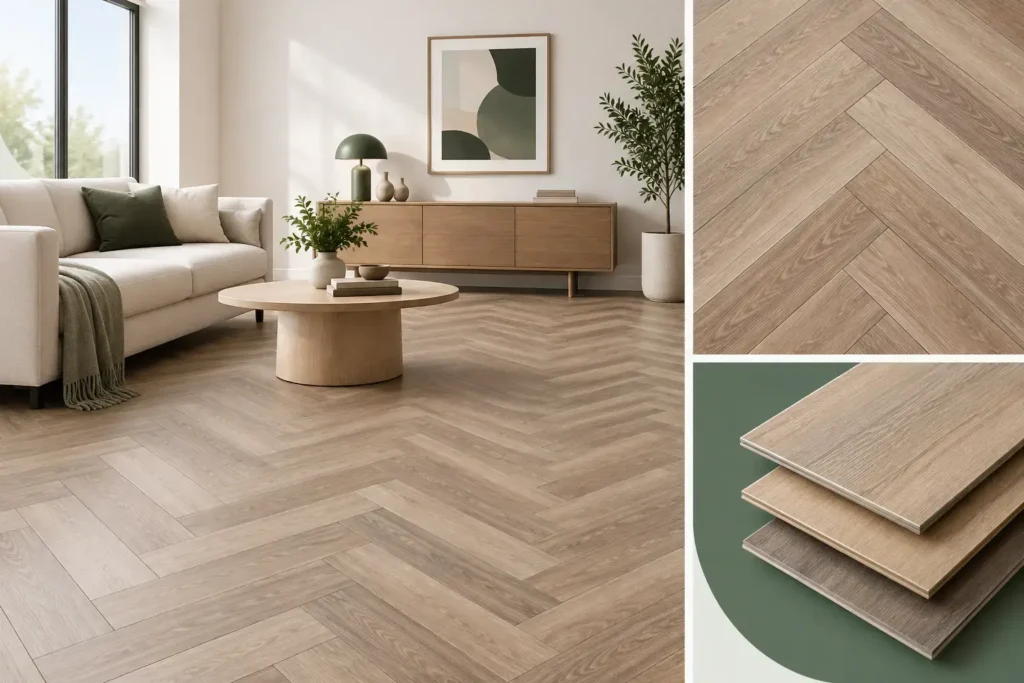
A herringbone floor changes the feel of a room before you add a single piece of furniture. The angled pattern brings movement, character and a more considered finish than a standard straight-plank layout. But is it practical for a busy family home, renovation or rental property? This herringbone laminate review looks at where it performs well, where it needs careful planning, and whether it offers the right balance of style, durability and value.
What makes herringbone laminate so popular?
Herringbone is a classic parquet pattern, traditionally associated with solid wood blocks in period homes. Laminate gives homeowners a more affordable way to achieve a similar visual effect, with the added reassurance of a hard-wearing, easy-care surface.
Unlike conventional laminate planks, herringbone boards are laid at right angles to create a repeating zig-zag pattern. The result can look smart and architectural in a hallway, dining room, lounge or open-plan kitchen area. It suits both traditional interiors and cleaner, more contemporary schemes, depending on the oak tone, board size and finish you choose.
The best designs do not try too hard to imitate a floor they are not. Good-quality herringbone laminate has convincing wood grain, natural colour variation and a textured surface that avoids an overly shiny, printed appearance. Pale oak can make smaller rooms feel lighter, while warm mid-oak shades bring a welcoming feel to family spaces. Darker options can look striking, but they tend to show dust and marks more readily.
Herringbone laminate review: the main advantages
The most obvious advantage is appearance. A well-chosen herringbone laminate floor can give a room a premium look for considerably less than real parquet or engineered wood flooring. It also provides a consistent finish across larger areas, which is useful when renovating several connected rooms.
Laminate is generally a sensible choice for homes with children, pets and regular footfall. Its wear layer is designed to resist everyday scuffs, scratches and stains better than many softer timber surfaces. Spilt drinks, muddy shoes and dropped toys still need dealing with promptly, but routine care is straightforward: vacuum or sweep regularly, then use a lightly damp mop recommended for laminate flooring.
It is also a practical option where budget matters. The cost is not only in the material itself. A herringbone effect can lift an ordinary room without requiring the expense of reclaimed timber, specialist sanding or ongoing wood-floor maintenance. For homeowners improving a property before selling, or landlords looking for a durable but attractive finish, that can make a real difference.
Many modern herringbone laminates use click-fit systems, so there is no need to glue every individual board as with traditional parquet. This can help keep installation cleaner and quicker when the subfloor is properly prepared.
The trade-offs to consider before buying
Herringbone laminate is not simply standard laminate with a different pattern. It requires more attention during fitting, which can affect the final cost. The layout needs to start squarely and remain accurate across the room. A small error near the first rows can become much more noticeable as the pattern continues.
There is normally more cutting around doorways, fireplaces, alcoves and irregular walls than with a straightforward plank layout. This means more waste should be allowed for when ordering. The exact allowance depends on the room shape, but a herringbone installation commonly requires more material than a conventional floor.
It is worth discussing this with your fitter before placing an order rather than relying on a simple room measurement. A good installer will account for the direction of the pattern, border details where required and the expansion gap around the perimeter.
Water resistance also needs a realistic view. Many premium laminate ranges are suitable for everyday household spills and may offer enhanced water resistance, but they are not automatically the same as waterproof LVT. Standing water, leaking appliances and excessive wet mopping can damage joints or cause swelling at the edges. For a bathroom, wet room or particularly splash-prone utility area, another flooring type may be more suitable.
Laminate cannot be sanded back and refinished in the way that engineered wood can. If a section is badly damaged, it will usually need replacing. This is less of a concern in a well-used family home where practicality is the priority, but it matters if you want a floor that can be restored decades later.
Is laminate herringbone convincing underfoot?
This depends on the product, the underlay and the quality of installation. The visual result can be excellent, particularly in ranges with embossed grain and a matt finish. From standing height, a carefully laid laminate herringbone floor can offer much of the character people want from wood.
Underfoot, however, laminate feels different from real timber. It is usually firmer and can sound hollow if laid over an uneven subfloor or with unsuitable underlay. This is not a reason to rule it out, but it is a reason not to treat preparation as an afterthought.
A level, clean and dry subfloor is essential. The right underlay can improve comfort, reduce sound transfer and support the locking joints. Where the floor is being fitted upstairs, acoustic performance may be especially relevant. In some flats and conversions, lease conditions may also set requirements for impact-sound reduction.
If the feel of genuine wood is your highest priority, engineered oak herringbone may be the better investment. It has a real timber top layer, natural variation and a more authentic feel. If you want the herringbone look with easier maintenance and a more controlled budget, laminate is often the better fit.
Choosing the right colour and board style
The pattern already makes a statement, so colour choice should work with the room rather than compete with it. Light natural oak is a dependable choice for hallways and open-plan spaces, particularly where daylight is limited. It works well with painted doors, soft neutral walls and modern furniture.
Mid-tone oak shades are often the most forgiving in everyday homes. They add warmth without making a space feel heavy and tend to hide dust better than very pale or very dark floors. Grey-toned laminate can look crisp in the right setting, although very cool shades may date more quickly than natural oak colours.
Consider the plank scale too. Smaller herringbone pieces can feel more traditional and detailed, while wider blocks create a bolder, more modern pattern. In a compact room, a busy layout can sometimes feel overwhelming. Seeing a full sample board, rather than choosing from a small online image, makes this much easier to judge.
It is also worth taking samples home. Look at them in morning light, evening light and alongside your skirting boards, kitchen units and existing furniture. Flooring covers a large area, so a colour that looks good under showroom lighting may feel quite different at home.
What should you expect to pay?
Herringbone laminate is usually priced above entry-level straight-plank laminate because of its design, construction and installation requirements. Even so, it remains one of the more cost-effective routes to a parquet-inspired floor.
The final budget should include the flooring, underlay, trims, skirting or scotia where needed, delivery and fitting. Do not overlook subfloor preparation. Levelling compounds, moisture barriers or repairs can be essential for a lasting result, particularly in older properties where floors are rarely perfectly flat.
The least expensive product is not always the best value. A floor in a high-traffic hallway or kitchen-diner needs a credible wear rating, dependable locking system and a finish you will still enjoy living with after a few years. Spending a little more on a better range and correct installation can avoid the frustration of lifted joints, visible gaps or early wear.
Who is herringbone laminate best for?
It is a strong choice for homeowners who want a stylish floor with everyday resilience and manageable maintenance. It works particularly well in lounges, hallways, dining rooms, bedrooms and open-plan living areas. It can also suit kitchens where spills are cleaned quickly and the chosen range is appropriate for the space.
It may be less suitable where constant water exposure is likely, where the subfloor has unresolved movement or damp issues, or where only the natural feel and lifespan of real wood will do. In those cases, LVT, engineered wood or another specialist solution may be worth considering.
For many renovation projects, the decision comes down to priorities. Herringbone laminate gives you the pattern, warmth and visual impact people associate with parquet, while keeping the purchase and upkeep more accessible. The key is to choose a quality range, allow for proper preparation and see the boards in person before committing.
At Oakley Wood Timber, homeowners can compare herringbone laminate alongside engineered wood and LVT in a large showroom, with helpful staff on hand to talk through colours, fitting requirements and the realities of each room. A floor is easier to choose when you can see the pattern at full scale, feel the texture and take a sample home to live with for a few days.