Is Parquet Flooring Right for Your Home?
1 November 2026
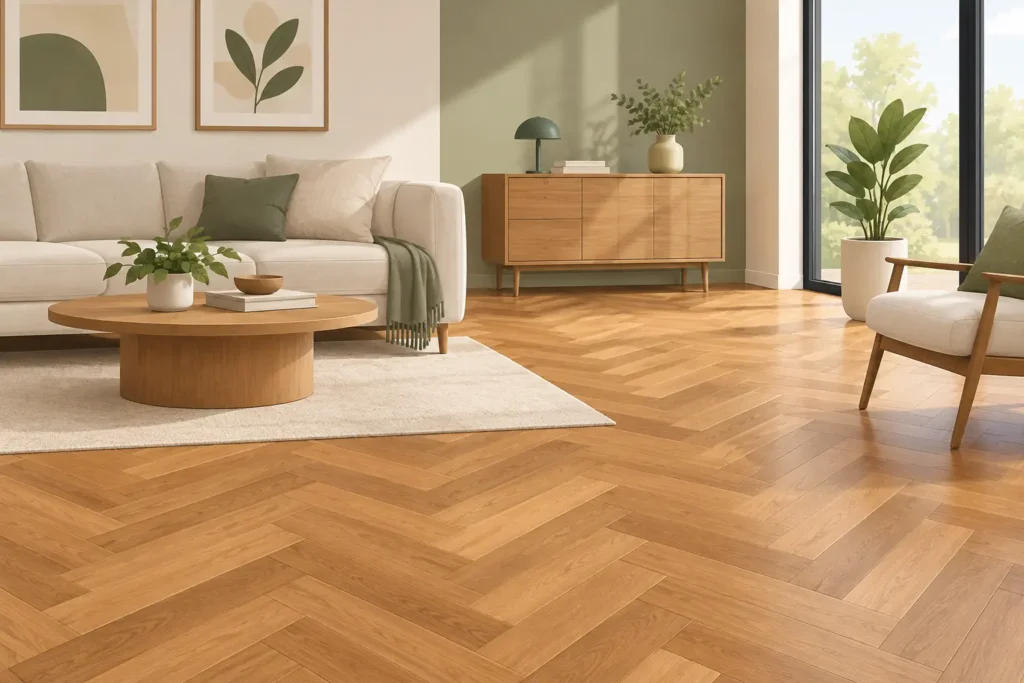
A hallway floor has to do more than look good. It is the first surface guests see, the place where wet shoes land, and often the detail that sets the tone for the rest of the house. Parquet flooring earns its place here because it brings pattern, warmth and a sense of permanence that wider plank flooring cannot quite replicate.
The familiar herringbone design is enjoying a well-deserved return, but parquet is far more than a passing interior trend. Done well, it works just as comfortably in a Victorian terrace, a country property or a clean-lined new build. The key is choosing the right material, scale and finish for the way your household actually lives.
What makes parquet flooring different?
Parquet flooring is made from smaller pieces of wood arranged in a repeating geometric pattern. Herringbone is the best-known option, with rectangular blocks laid in a broken zig-zag formation. Chevron has a sharper, continuous point because each block is cut at an angle. Basket weave, brick bond and more decorative panel designs are also available, although herringbone remains the most versatile choice for most homes.
Unlike a standard plank floor, parquet draws the eye across the room. It can make an ordinary living room feel considered and characterful, or give a kitchen-diner a strong visual connection from one area to the next. That pattern is precisely why the choice deserves a little more thought. The wrong block size or finish can make a compact room feel busy, while the right one can add depth without overwhelming the space.
Engineered or solid wood parquet?
For most modern homes, engineered wood parquet is the practical starting point. It has a real hardwood wear layer on top, supported by layers of timber beneath that are built for greater stability. This construction makes it better suited to the temperature and humidity changes found in busy family homes, and it can often be fitted over compatible underfloor heating systems.
Solid wood parquet is made from one piece of timber all the way through. It is a beautiful, traditional choice and can be sanded back repeatedly over a long lifespan. However, wood naturally responds to moisture and seasonal movement. Solid parquet needs the right subfloor, careful acclimatisation and experienced fitting, so it is usually best reserved for suitable ground-floor spaces rather than every room in the house.
Neither option is automatically better. If you are renovating a period property and want a floor with traditional construction and the potential for future restoration, solid wood may be worth the additional preparation. If you want the look of oak herringbone in an open-plan kitchen, living area or upstairs bedroom, engineered parquet is often the more straightforward and dependable answer.
Look beyond the species
Oak is the most popular choice for good reason. It is durable, naturally characterful and available in a wide range of tones, from pale unfinished boards to rich smoked finishes. Brushed oak enhances the grain and is forgiving of small marks, while a smooth lacquered surface gives a cleaner, more contemporary appearance.
The grade of the timber matters too. Prime-grade oak has a calmer, more uniform appearance with fewer knots. Rustic and character grades show more natural variation, knots and colour movement. For a home with dogs, children and plenty of visitors, a characterful floor can be a sensible choice as daily life tends to blend into the timber rather than stand out against it.
Choosing the right pattern, block size and colour
There is no single correct parquet for every room. A narrow herringbone block can look elegant in a hall, snug or older property, where its smaller scale feels in keeping with the building. Larger blocks give a more relaxed, contemporary finish and are often a better fit for generous open-plan rooms.
Consider where the pattern will begin and end. In a hallway, herringbone normally looks best running along the length of the space. In a wider room, its direction can help lead the eye towards a fireplace, garden doors or a key piece of furniture. Borders can create a formal, traditional look, but they are not essential. A simple herringbone layout with a neat perimeter is often more appropriate for everyday modern living.
Colour should be chosen with the room's light levels, not just from a small sample. Pale natural oak can brighten a north-facing room, although very light finishes may show muddy footprints more readily in an entrance. Mid-oak tones are wonderfully adaptable and work with both painted cabinetry and natural furniture. Darker smoked or walnut-toned parquet is striking, but it needs enough natural light and can show dust more clearly.
This is where seeing full boards and fitted displays makes a real difference. A sample can show the colour, but a larger floor area reveals the grain variation, the size of the pattern and how the finish behaves under changing light.
Where can parquet be fitted?
Living rooms, dining rooms, bedrooms and hallways are natural homes for parquet. Engineered wood parquet is also a popular option for open-plan kitchen-diners, provided spills are wiped up promptly and the floor is specified for the environment. A good entrance mat and sensible care will protect the surface where footfall is heaviest.
Bathrooms are generally not the right place for real wood parquet. Regular splashing, steam and standing water create conditions that wood flooring is not designed to handle. For a coordinated look between spaces, an oak-effect luxury vinyl tile can provide the practical water resistance needed in a bathroom, utility room or busy boot room.
If underfloor heating is part of your renovation, check compatibility before ordering. Engineered parquet is commonly suitable when the heating system, adhesive and subfloor preparation meet the manufacturer's requirements. The floor temperature must be controlled carefully. Fast or excessive heat changes can stress any timber floor, whatever its quality.
Fitting is where a good floor becomes a great one
Parquet is not a floor to rush. The subfloor must be dry, clean and level before fitting begins. Small imperfections underneath can be far more noticeable when the surface pattern is made up of precise individual blocks.
Many engineered parquet floors are designed to be glued down, which creates a solid feel underfoot and helps support the intricate layout. Some products have click systems, offering a quicker installation route, but the best choice depends on the floor construction and room conditions. Your fitter should assess moisture levels and subfloor suitability rather than making assumptions from appearance alone.
Allow for an appropriate expansion gap at the edges, then finish the perimeter carefully with skirting, beading or a suitable trim. Details such as thresholds, stair nosings and transitions into adjoining rooms deserve planning early. They make the difference between a floor that merely looks good in photographs and one that feels properly finished every day.
Caring for parquet in a busy home
A quality wood floor is designed to be lived on, not treated like museum furniture. Regular vacuuming with a suitable hard-floor attachment or sweeping with a soft brush removes grit that can dull the finish over time. Use mats at external doors, felt pads beneath furniture and clean up spills without delay.
Avoid soaking the floor or using steam mops. A lightly damp microfibre mop and a cleaner approved for the particular finish are usually all that is needed. If the floor eventually picks up more wear than you would like, many engineered floors with a substantial wear layer can be professionally refreshed, while solid wood offers even greater scope for sanding and refinishing.
Parquet does not have to remain pristine to look good. A few gentle signs of use can add warmth to real timber. The goal is to protect the finish from avoidable damage, not to stop family life in its tracks.
See the pattern before you commit
Parquet flooring is a considered purchase, especially when it will run through several rooms or form part of a larger refurbishment. Comparing tones, textures and block sizes in person is the simplest way to narrow the options with confidence. At Oakley Wood Timber, homeowners can view a huge selection of premium wood flooring and talk through practical questions with helpful staff who understand the difference that fitting, room use and budget can make.
Take along a cupboard door, paint sample or photograph of the room if you can. Seeing those details beside the flooring often makes the right direction clear. The best parquet is not necessarily the boldest sample on display - it is the one that still feels right when the house is busy, the light changes and years of everyday life begin to settle into the wood.