2026 Flooring Trends for Stylish British Homes
11 November 2026
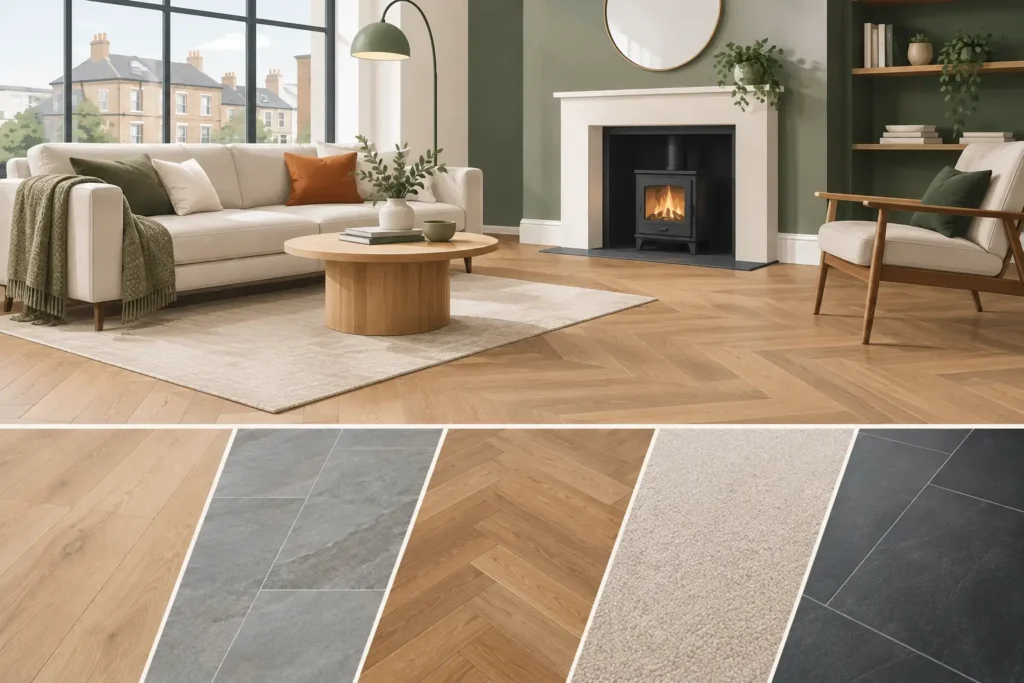
A floor has to do far more than look good in a sample. It needs to suit the light in your room, stand up to family life, work alongside your doors and furniture, and still feel right years from now. The strongest 2026 flooring trends are therefore less about chasing a short-lived look and more about choosing warmer, more natural and genuinely liveable finishes.
For homeowners renovating across Buckinghamshire, that means a move away from cool grey schemes and overly uniform surfaces. Characterful timber, soft earthy shades and hardwearing alternatives that look convincing are taking their place. The best choice will still depend on the room, your household and your budget, but the direction of travel is clear: homes are becoming more comfortable, layered and personal.
2026 flooring trends: warmth, texture and longevity
The return of warmth is the biggest story for 2026. Pale grey oak and stark white finishes can still have a place in a very contemporary home, but warmer natural wood tones are likely to feel more considered and easier to live with. Think honeyed oak, mellow mid-browns, gentle smoked tones and finishes that allow the grain to show through.
This change works particularly well in British homes, where daylight can vary dramatically from room to room. A floor with a little warmth can make north-facing spaces feel more welcoming, while still sitting comfortably with modern kitchens, painted cabinetry and neutral walls.
Texture matters too. Brushed, lightly distressed and matt-finished boards offer visual depth without making a room feel busy. They are also practical. A matt, textured surface tends to disguise the small marks, dust and everyday wear that are unavoidable in a busy household better than a high-gloss floor.
Natural variation is part of the appeal
Perfectly even colour and grain once appealed because they created a very controlled look. Now, more homeowners are choosing flooring with knots, tonal movement and individual board character. It makes a room feel less manufactured and gives a new extension or refurbished space a more settled appearance.
That does not mean every floor needs dramatic knots or rustic grade timber. A cleaner select-grade oak can still look timeless. The point is to choose a product whose natural features suit the style of your home, rather than expecting every plank to look identical.
Wider boards remain a popular choice
Wide-plank flooring continues to be one of the most requested looks, particularly in open-plan kitchens, dining rooms and larger lounges. Fewer joins across the floor can make a space feel calmer and more expansive, while the wider format gives the grain greater presence.
Engineered wood flooring is often a sensible route to achieving this look. It provides the real timber surface many homeowners want, with a construction designed for greater stability than solid wood when conditions change through the seasons. It can be an especially strong option over underfloor heating, provided the product and installation method are suitable.
In smaller rooms, however, very wide boards are not automatically the answer. A medium-width board can look more in proportion and may offer better value. Viewing samples at full length, rather than relying on a small photograph, makes a real difference here.
Plank patterns become more considered
Straight-laid planks remain the practical favourite and are unlikely to date. For those looking to add more detail, herringbone and chevron patterns continue to be popular in hallways, dining spaces and period properties.
Herringbone brings movement and a sense of craftsmanship, especially when paired with a border or a contrasting feature strip. It does require more planning, more material and more fitting time than a standard plank floor, so it is worth allowing for this in the budget. In a small or irregularly shaped room, a simple plank may give the cleaner result.
Timber looks for real homes
Premium wood flooring remains the benchmark for natural character, repairability and long-term appeal. Oak is still the leading choice because it works with both traditional and contemporary interiors, but the finish is becoming more important than the species alone. Soft matt lacquered oak, natural oils and subtle smoked effects are all helping homeowners create a more relaxed look.
Engineered wood is likely to remain the most versatile option for many renovations. It offers authentic timber underfoot and a substantial appearance, while being available in a wide range of board widths, grades and finishes. Solid wood flooring has its place too, particularly where the floor construction and room conditions suit it, but it needs more careful consideration around moisture and temperature changes.
For a kitchen, utility or entrance area, think beyond appearance. Water spillages, muddy shoes and pets can be hard on any real wood floor. A well-chosen finish and prompt cleaning will help, but another material may be the more practical choice in the wettest parts of the home.
LVT and laminate move beyond the utility look
Luxury vinyl tile, commonly known as LVT, continues to earn its place in 2026 because it combines convincing wood and stone designs with everyday resilience. It is a strong option for kitchens, hallways and utility rooms, where water resistance and easy cleaning are priorities. Modern plank and tile designs have come a long way from the flat vinyl looks many people remember.
LVT can also help create a consistent look across practical spaces. A natural oak-effect LVT floor can connect a kitchen, dining area and hallway without asking you to compromise on day-to-day durability. The feel underfoot and final result will vary between products, so it is worth comparing them properly rather than choosing from an image online.
Luxury laminate is another flooring trend worth considering, especially when value is central to the project. Better-quality laminate now offers realistic surface texture, excellent wear resistance and a huge selection of timber effects. It is well suited to busy family rooms, bedrooms and rental properties, although it is important to choose a product rated for the room and to manage water spillages carefully.
The trade-off is straightforward. Real wood brings authenticity and can be refinished in certain cases, while LVT and laminate provide a lower-maintenance, often more affordable answer for demanding areas. There is no single best floor for the entire house.
Floors that work with the rest of the interior
A successful renovation is not about treating the floor as an isolated decision. In 2026, homeowners are increasingly looking at how flooring, internal doors, worktops and wall colours sit together. Warm oak flooring can complement oak or walnut-toned worktops, while soft natural floors work beautifully with off-white, sage, clay and deep blue painted doors.
Matching every timber tone exactly is not necessary and can make a room feel flat. Instead, aim for a shared warmth. For example, a natural oak floor can sit well beside a slightly darker timber worktop if both have a warm undertone. Samples should always be viewed together in the room where they will be used, ideally at different times of day.
Thresholds deserve attention as well. Where one flooring type meets another, a neat transition makes the whole project feel more considered. This is particularly relevant when combining wood-effect LVT in a kitchen with engineered oak in an adjoining living area.
Choose the trend that suits your home
The most useful 2026 flooring trend is confidence in choosing for your own space, not simply copying a photograph. Consider how much natural light you have, whether the room leads directly to the garden, the presence of pets or children, and whether you are planning underfloor heating. These details quickly narrow the options.
Seeing flooring in person is invaluable. Colour, texture, board size and surface finish can look very different at full scale, and a helpful conversation can prevent an expensive mismatch. At Oakley Wood Timber, our family-run team can help you compare premium wood flooring, LVT and luxury laminate from a huge selection in the showroom, with practical advice shaped by more than 30 years in the trade.
Choose a floor you will be pleased to come home to on an ordinary Tuesday, not just one that looks impressive in a trend report. The right surface should make everyday life easier while giving your home the warmth and character it deserves.