Best Flooring for Allergies: What to Choose
15 November 2026
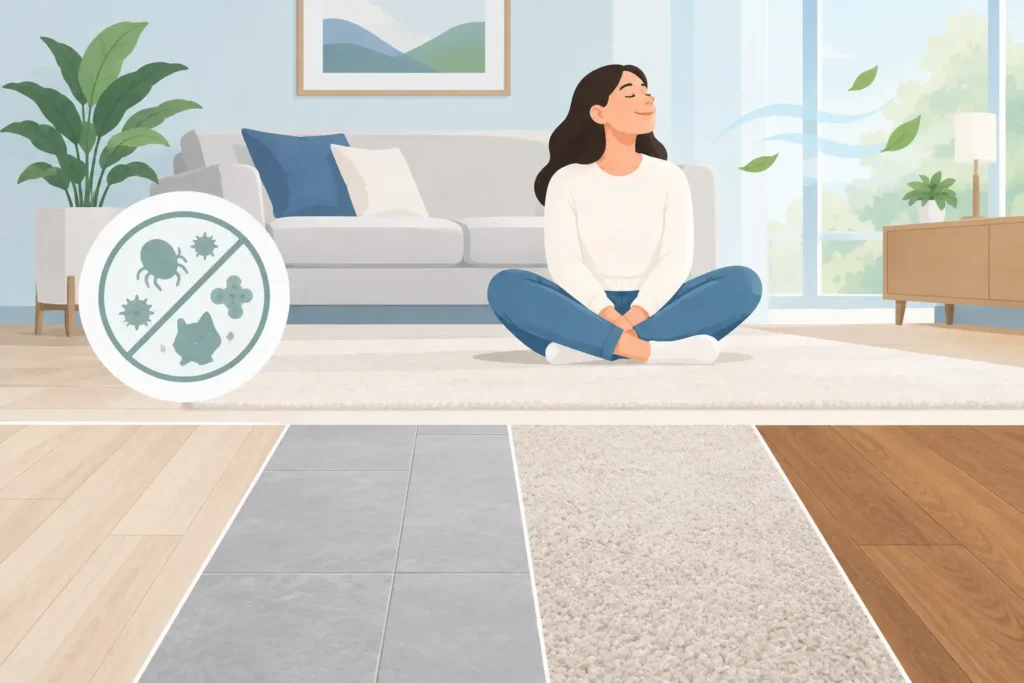
A floor can quietly make allergy management harder. Deep-pile carpet, worn joins and difficult-to-clean textures give dust, pet hair and pollen somewhere to settle between cleans. The best flooring for allergies is usually a hard, smooth surface that can be cleaned thoroughly and does not trap debris in fibres.
That does not mean every hard floor is identical, or that one material suits every room. Families with pets, period-property owners, landlords and renovators will have different priorities around warmth, appearance, water resistance and budget. The practical aim is simple: choose a floor with a sealed, low-maintenance finish, then make sure it is fitted and cared for properly.
What makes flooring better for allergy sufferers?
Hard flooring does not remove allergens from a home, but it makes them far easier to see and remove. Dust mites, pollen, skin flakes and pet dander can sit on any surface. On a smooth floor, regular vacuuming with a suitable hard-floor setting and damp mopping can lift them away rather than pushing them further into a pile.
A good allergy-conscious floor should have a non-porous or well-sealed surface, minimal texture and dependable joints. It should also be compatible with the cleaning routine you can realistically keep up with. A beautiful floor that needs specialist products every week is unlikely to be the best choice for a busy household.
Indoor air quality matters too. Flooring, adhesives, underlays and finishes can all release low levels of volatile organic compounds, particularly when newly installed. Ask about low-emission products and suitable installation methods, and ventilate the room well during and after fitting. This is especially worth considering in bedrooms, nurseries and homes where someone has asthma or sensitivities.
Best flooring for allergies: the main options
Engineered wood flooring
For many homeowners, engineered wood is the strongest all-round choice. It delivers the warmth, grain and long-term appeal of real timber, while its layered construction offers greater stability than solid wood in the changing temperatures and humidity levels of a typical home.
A quality engineered wood floor with a factory-applied lacquered or oiled finish gives dust and dander little opportunity to lodge on the surface. It is straightforward to vacuum and clean with a well-wrung microfibre mop. Wide boards can also mean fewer joins across the room, although the fitting method and board profile matter more than board width alone.
The trade-off is water. Engineered wood is suitable for most living spaces, halls, bedrooms and dining rooms, but it is not the first choice for a family bathroom or a utility room where frequent splashes are likely. Oiled finishes can be repaired locally and have a natural look, but they need periodic care. Lacquered finishes tend to be simpler for households wanting a more protected, lower-maintenance surface.
LVT flooring
Luxury vinyl tile, commonly called LVT, is one of the most practical choices where water resistance and easy cleaning sit at the top of the list. Its sealed surface does not have fibres to hold dust, and it handles muddy paws, spills and regular mopping particularly well. It is also warmer and quieter underfoot than ceramic tile, which can make a noticeable difference in kitchens and busy family areas.
LVT comes in convincing wood and stone effects, so it can work with both traditional Buckinghamshire homes and more contemporary refurbishments. It is particularly useful in kitchens, utility rooms, cloakrooms and entrance halls, where pollen and outdoor dirt are most likely to be brought in.
Not all LVT is fitted in the same way. Click systems are often convenient, while gluedown LVT can provide a very neat, stable finish when the subfloor is properly prepared. The condition of the subfloor is crucial: an uneven base can create gaps or movement over time, which makes any floor harder to keep looking and performing its best.
Quality laminate flooring
Modern laminate is a sensible, value-conscious option for allergy-friendly bedrooms, lounges and home offices. It has a hard, wipeable top layer and is easy to vacuum, making it much simpler to manage than carpet. Higher-quality laminate can also offer excellent resistance to everyday scuffs and scratches.
The limitation is moisture. Although many modern ranges have improved water resistance, laminate should not be treated as fully waterproof unless the specific product is designed for that use. Standing water can damage the core or get into joins, so it is better suited to dry areas than bathrooms.
Look for a smooth, low-texture finish rather than a deeply embossed surface if allergies are a priority. A subtle wood grain is attractive and practical; heavy texture can hold more fine dust and require more careful cleaning.
Solid wood flooring
Solid wood flooring can also be a very good option for allergy-conscious homes. A properly sealed timber floor is easy to clean, exceptionally characterful and can be sanded and refinished over its lifetime. For homeowners restoring an older property, its authentic appearance is difficult to match.
However, solid wood responds more noticeably to moisture and temperature changes than engineered wood. It needs the right environment, careful fitting and an understanding of seasonal movement. It is normally best kept to stable, dry rooms rather than kitchens, bathrooms or spaces with underfloor heating restrictions. For many renovation projects, engineered wood provides a more forgiving route to the same natural look.
Which floors are less suitable?
Carpet is not automatically off limits, but it is usually the least straightforward option for people with allergies. Fibres can hold dust, pet dander and pollen, even when the carpet looks clean. Regular vacuuming with a sealed, high-filtration vacuum can help, but it requires more effort than a hard surface.
If carpet is wanted for comfort in a bedroom, choose a low-pile style and keep rugs to a minimum. Washable rugs are generally easier to manage than large, heavy rugs with deep pile. Avoid adding unnecessary fabric layers where possible, particularly in rooms used by someone with persistent allergy symptoms.
Natural-fibre flooring such as sisal and seagrass has plenty of visual appeal, but its texture can make cleaning more difficult. It can suit a low-traffic room with the right care, yet it is not usually the most practical answer when reducing trapped dust is the main objective.
Fitting details matter as much as the floor
The cleanest-looking floor can still disappoint if the preparation is poor. Gaps around edges, loose boards, damaged seals and uneven subfloors can all collect dust or make cleaning awkward. The right underlay, moisture barrier and fitting method depend on the floor type and the room below it.
For allergy-prone households, it is worth planning the whole finish rather than choosing boards in isolation. Consider neat matching trims, an appropriate door clearance and a skirting detail that leaves no obvious dirt trap. In kitchens and utilities, ensure the perimeter treatment is suited to moisture exposure. These small decisions make day-to-day cleaning easier and protect the investment in the floor.
Underfloor heating can also influence the choice. Engineered wood, selected laminates and many LVT products can be compatible with suitable systems, but each range has its own conditions. Confirm the product specification before ordering rather than assuming any hard floor will perform the same way.
Keeping an allergy-friendly floor clean
A simple routine is more effective than aggressive cleaning. Vacuum regularly using a hard-floor tool, particularly near external doors and in homes with pets. Follow with a lightly damp microfibre mop where the flooring manufacturer permits it. Excess water is unnecessary and can be harmful to wood and laminate.
Use the recommended cleaner rather than strong bleach, steam or oily polishes. These can leave residue, dull a finish or affect joints. Door mats at entrances and a shoes-off routine can reduce the pollen, grit and outdoor contaminants brought into the house in the first place.
Choosing flooring is easier when you can see the surface, feel its texture and compare how different finishes will sit with your home. At Oakley Wood Timber, our helpful staff can talk through premium wood flooring, LVT and luxury laminate options in person, so you can balance allergy concerns with the style, durability and affordable price that suit your project.
The right floor should feel good to live with, not create another cleaning job to worry about. A smooth, well-fitted surface and a realistic care routine give you the best chance of keeping your rooms comfortable, clean and welcoming every day.