How to Choose the Best Floors for Period Homes
19 November 2026
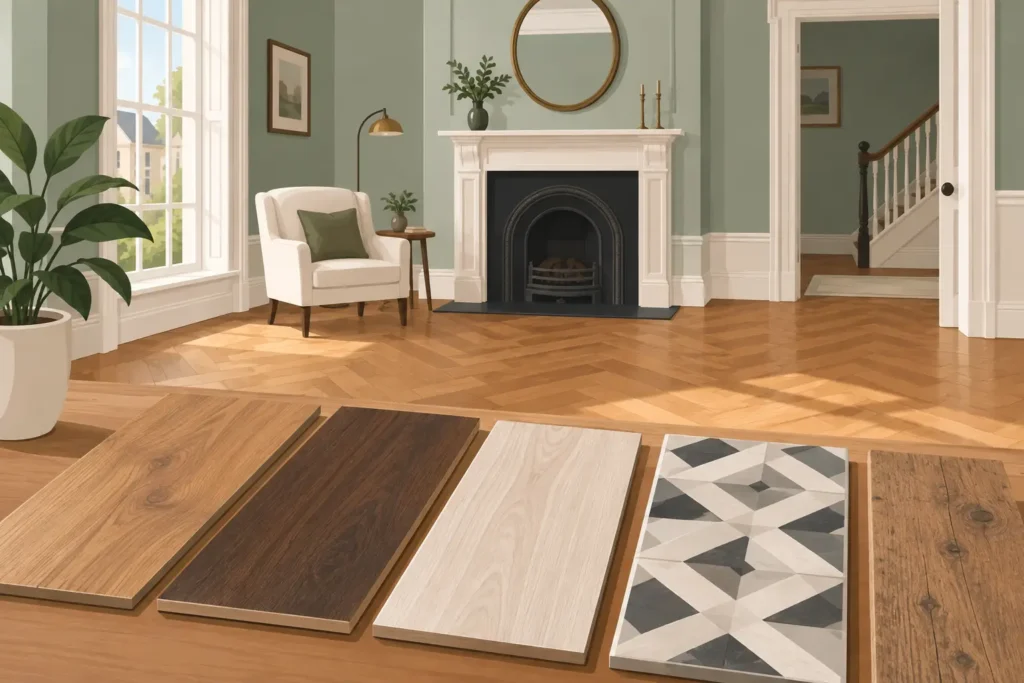
A period property rarely needs a floor that simply looks old. It needs one that feels at home with the building, stands up to modern family life and does not turn every practical decision into a compromise. The best floors for period homes balance original character with warmth, durability and a finish you will still enjoy living with years from now.
Whether you are restoring a Victorian terrace, updating an Edwardian family house or bringing comfort to a cottage, start by looking at the room as it is used rather than the age of the property alone. Original features, natural light, subfloor condition, pets, children and heating all have a part to play.
Start with the character already in the room
Period homes often have features worth working around rather than competing with: deep skirting boards, fireplaces, panelled doors, exposed brick, sash windows and detailed coving. Flooring should support those details. In many cases, a natural timber floor with visible grain and a matt or low-sheen finish gives the most convincing result.
That does not mean every old property needs dark, heavily distressed boards. A small room with limited daylight can feel much more generous with a light oak floor, while a larger reception room may suit warmer honey tones or a deeper smoked oak. The key is to choose a colour and board style that looks settled rather than overly styled.
Wide planks can look particularly effective in larger rooms, where they show off the grain and create a calm, considered surface. Narrower boards can be a better fit for compact rooms or properties where the original floor layout was more traditional. Parquet and herringbone are also strong choices, especially in entrance halls, dining rooms and formal living spaces, but they need a room with enough space for the pattern to be appreciated.
Engineered wood is often the practical first choice
For many renovations, engineered wood is among the best floors for period homes because it delivers the appearance and feel of real timber with greater stability than solid wood. It has a genuine hardwood top layer, so the surface has natural variation, grain and depth that imitation products cannot fully replicate.
The construction beneath that top layer makes it more resistant to seasonal movement. Older properties can have changing temperatures, variable humidity and subfloors that are not perfectly level, particularly during a phased renovation. Engineered boards cope well with these everyday realities when specified and fitted correctly.
It is also a sensible option where underfloor heating is planned. Many period-home owners want to improve comfort without losing character, and engineered wood can offer both. Always check the individual product and heating system requirements before buying, as board thickness, installation method and temperature limits matter.
Choose a brushed, oiled or matt lacquered finish if you want a relaxed, lived-in appearance. Brushed oak helps disguise the small marks that come with busy homes, while an oiled floor can be locally refreshed if it picks up wear over time. Lacquered finishes are generally easier for low-maintenance cleaning, making them attractive for hallways and family rooms.
When solid wood flooring earns its place
Solid wood flooring has a presence that is hard to match. Each board is made from one piece of timber, offering authentic weight, texture and the potential to be sanded and refinished over its lifetime. In the right setting, it can be a superb long-term investment for a period property.
It is best suited to dry, stable rooms such as lounges, bedrooms and dining rooms. A well-prepared ground floor with good ventilation and a suitable subfloor gives solid wood the conditions it needs to perform properly. It is less forgiving where moisture, temperature changes or uneven substrates are likely to be an issue.
This is where expert guidance matters. Solid wood may be the right answer for a carefully restored Georgian reception room, but not necessarily for a kitchen extension joined to the original house. The look can be consistent across both areas, while the construction beneath the surface is chosen to suit each space.
Oak remains a favourite because it is durable, versatile and works with both traditional and more contemporary interiors. Character-grade oak, with knots and colour variation, can feel especially natural in an older home. Select-grade boards have a cleaner, more uniform appearance, which may suit a more formal renovation but can look less forgiving if the rest of the property is full of original irregularities.
Do not overlook LVT in hard-working rooms
Luxury vinyl tile, usually known as LVT, is an excellent practical alternative where real wood is not the most sensible choice. Modern wood-effect LVT has come a long way and gives you the appearance of timber alongside a water-resistant, easy-care surface.
It works particularly well in kitchens, utility rooms, entrance halls and ground-floor spaces used by children or dogs. Muddy shoes, spills and frequent cleaning are part of daily life, and LVT takes them in its stride. It is also warmer and quieter underfoot than ceramic tile, which can make a noticeable difference in older homes where rooms may already feel cool.
The trade-off is authenticity. A premium LVT design can look very convincing, especially once fitted across a room, but it will not have the natural texture or unique grain of real oak. For some homeowners, that is a worthwhile exchange for practicality. For others, engineered wood in the main living areas and LVT in the most demanding spaces is the best of both worlds.
If you choose LVT, avoid a finish that is too glossy or overly grey if the aim is a sympathetic period look. Warm oak tones, subtle grain and a plank size that reflects real timber usually sit more comfortably alongside traditional joinery and original details.
Laminate can offer value without looking basic
Quality laminate flooring is another option for period homes, particularly for bedrooms, upstairs landings, rental properties or renovation projects with a close eye on budget. It is tough, straightforward to maintain and available in a huge selection of wood styles.
The difference between a basic laminate and a well-chosen one is clear in the texture, plank proportions and surface detail. Look for an embossed finish that follows the grain pattern and a restrained colour rather than a design that tries too hard to imitate reclaimed timber. A good laminate floor can create a smart, welcoming finish at an affordable price.
As with LVT, it is not the same material as wood. That may not matter in a busy bedroom or a property being upgraded for letting, but it is worth being honest about the desired finish in a principal reception room. Spending more on engineered wood where people gather, then choosing laminate in lower-impact areas, can be a sensible way to allocate the budget.
Match the floor to the room, not just the style
A single floor throughout can make a period home feel connected, but it is not always the most practical approach. Kitchens and utility rooms need a surface that can handle water. Bedrooms benefit from warmth and a quieter feel. Hallways need durability, while living rooms often deserve the visual impact of natural timber.
Consider sightlines as well. If an entrance hall opens directly onto a lounge, coordinating tones between materials matters more than using exactly the same product. A warm oak-effect LVT in the hall can sit beautifully beside engineered oak in the living room when the colours are selected together.
Also think about transitions. Older houses are not always square, level or straightforward, and changes in floor height may need careful planning around door thresholds, fireplaces and existing skirtings. A good fitting plan protects the finish as much as the product choice does.
Give samples the proper test
Flooring can look very different under showroom lighting, daylight and evening lamps. Take samples home where possible and place them next to your paint colours, furniture, curtains and internal doors. Look at them at different times of day, especially in north-facing rooms where cooler light can change the appearance of oak.
It is worth viewing full boards rather than making a decision from a small swatch. Natural wood varies from plank to plank, and that variation is part of its appeal. Seeing a larger sample helps you judge knotting, grain movement and colour range properly.
At Oakley Wood Timber, homeowners can compare more than 600 products in person and speak to helpful staff who understand the practical questions behind a flooring choice. For a period property, that hands-on comparison is often the quickest way to find a floor that looks right, feels right and suits the way your household actually lives.
The right floor should not make a period home feel like a museum. Choose a material that respects its history, then give yourself the comfort and practicality needed for the next chapter of its life.